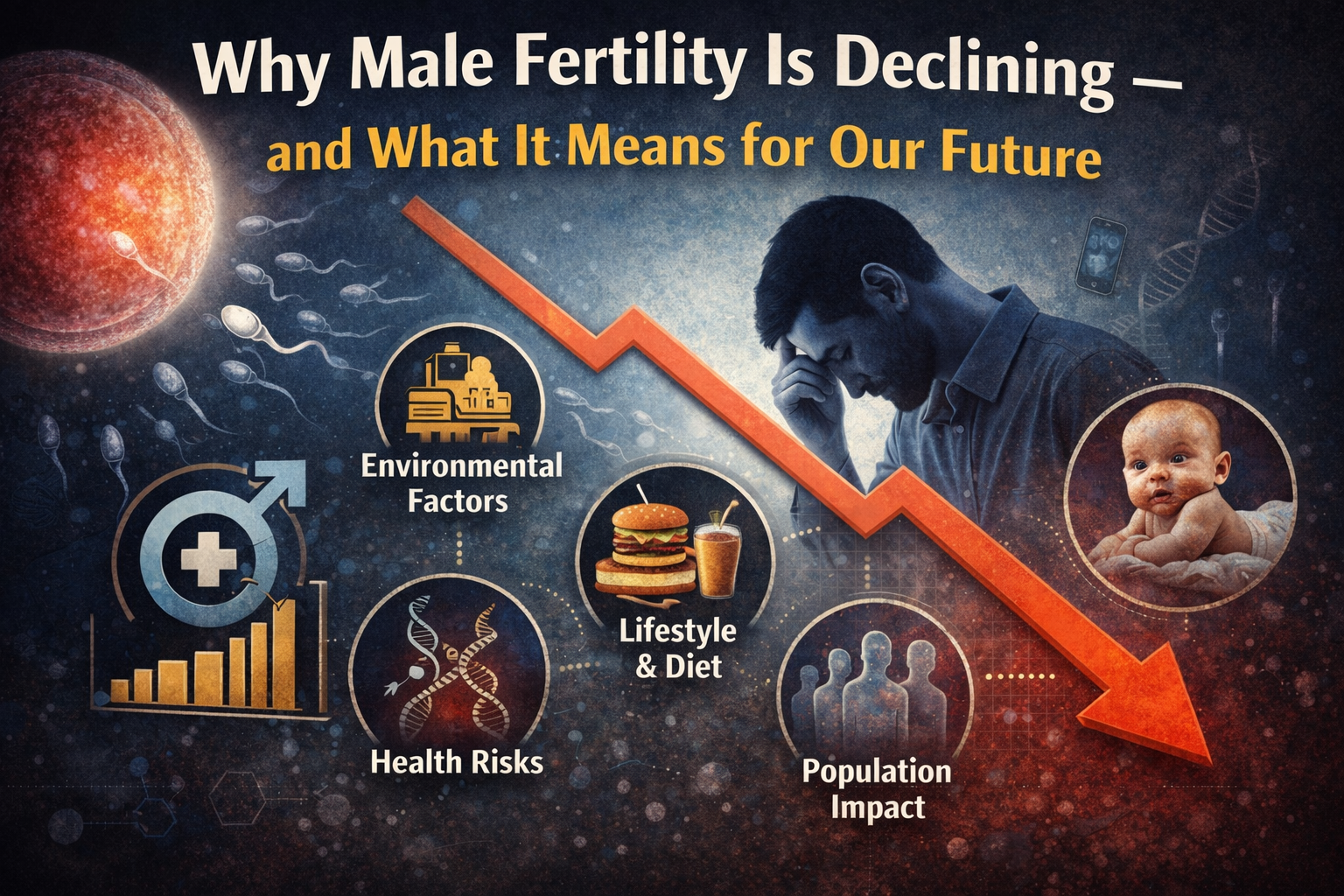
In the previous discussion on male fertility decline, we examined the large-scale epidemiological data showing generational reductions in sperm count and testosterone levels, alongside the rise of metabolic syndrome and endocrine disruption. What becomes increasingly clear when we move beyond population statistics is that fertility decline reflects something deeper than reproductive dysfunction alone. It reflects a systemic erosion of metabolic resilience.
Reproductive capacity requires energy, hormonal precision, vascular integrity, immune balance, and mitochondrial efficiency. When those systems weaken across a population, fertility becomes one of the earliest biological signals.
This article explores the deeper cellular and generational layers of reproductive decline and, more importantly, what rebuilding resilience actually requires.
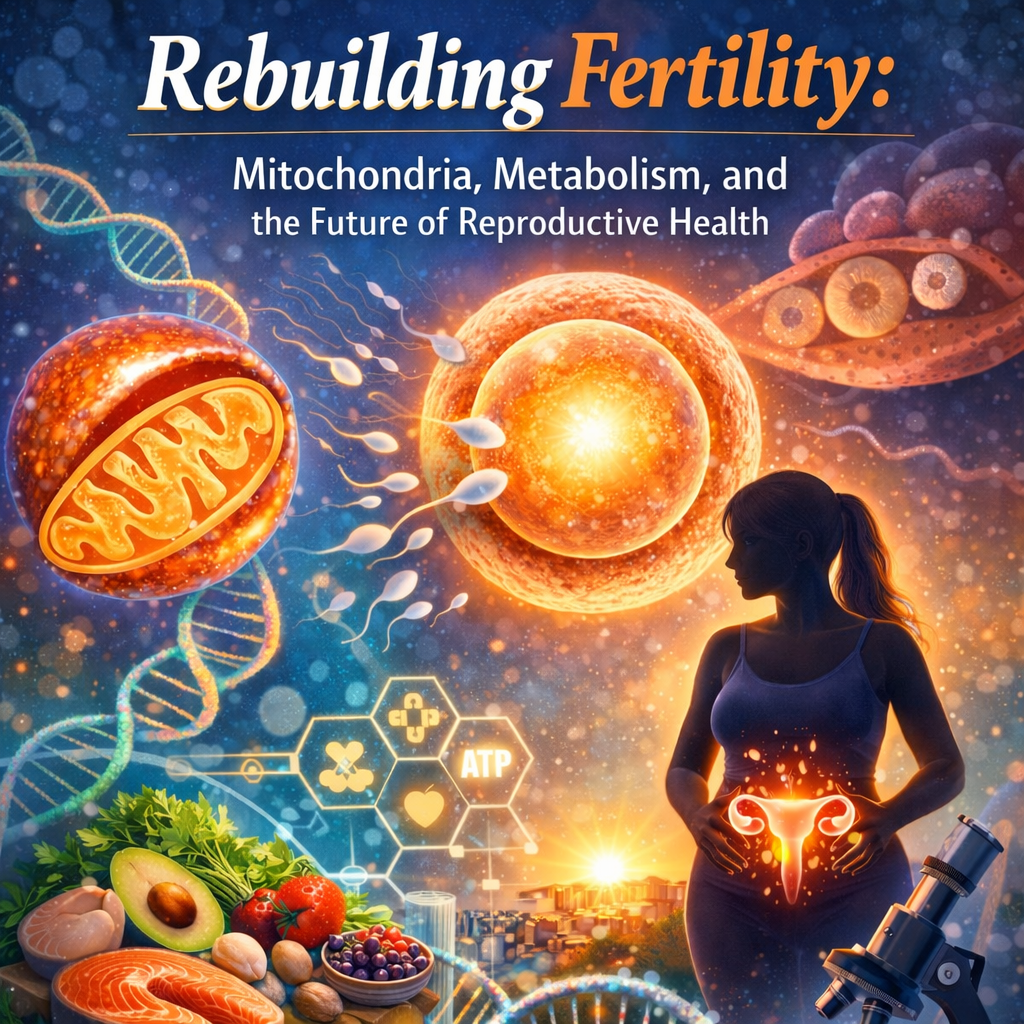
Sperm cells are among the most metabolically active cells in the human body. Each sperm contains a concentrated bundle of mitochondria in its midpiece, responsible for producing ATP through oxidative phosphorylation. That ATP fuels motility, and motility determines the sperm’s ability to reach and penetrate the egg.
When mitochondrial function declines, motility declines.
Research published in journals such as Mitochondrion and Biochimica et Biophysica Acta demonstrates that reduced mitochondrial membrane potential correlates strongly with impaired sperm motility and increased DNA fragmentation. Mitochondrial DNA is particularly vulnerable to oxidative stress because it lacks the protective histone proteins found in nuclear DNA. Damage accumulates when reactive oxygen species increase.
Metabolic syndrome, insulin resistance, and chronic inflammation elevate oxidative stress throughout the body. In reproductive tissue, this manifests as lipid peroxidation and DNA instability.
One compound frequently measured in fertility research is malondialdehyde (MDA), a byproduct of lipid peroxidation. Elevated MDA levels in seminal plasma correlate with reduced motility and increased sperm DNA fragmentation. Because sperm membranes are rich in polyunsaturated fatty acids, they are especially vulnerable to oxidative damage.
Fertility, at its core, reflects mitochondrial health.
Reproductive physiology depends heavily on microvascular circulation. The testes require efficient blood flow to deliver oxygen and nutrients necessary for spermatogenesis.
Endothelial cells lining blood vessels produce nitric oxide, a molecule responsible for vasodilation. Insulin resistance impairs endothelial nitric oxide synthase (eNOS) activity, reducing nitric oxide availability. Research in Circulation Research and The Journal of Sexual Medicine has shown that endothelial dysfunction often precedes cardiovascular disease and correlates with erectile dysfunction in younger men.
Reduced vascular integrity compromises oxygen delivery to reproductive tissue, increasing oxidative stress and reducing sperm production efficiency.
Reproductive health often mirrors cardiovascular health. When vascular resilience declines, fertility follows.
Testosterone production follows a circadian pattern, peaking during deep sleep. Sleep restriction studies published in JAMA and The Journal of Clinical Endocrinology & Metabolism demonstrate that even one week of reduced sleep significantly lowers daytime testosterone levels in healthy young men.
Circadian misalignment also impairs insulin sensitivity. Elevated nighttime cortisol and prolonged artificial light exposure suppress melatonin production. Melatonin functions not only as a sleep hormone but also as a mitochondrial antioxidant. Reduced melatonin increases oxidative stress burden inside reproductive cells.
Modern lifestyles characterized by irregular sleep, late-night digital exposure, and reduced morning light weaken hormonal rhythm. Flattened hormonal rhythms translate into weaker signaling throughout the hypothalamic-pituitary-gonadal axis.
Hormonal stability depends on circadian stability.
Sperm carries more than genetic code. It carries epigenetic markers that influence gene expression in offspring. DNA methylation patterns, histone modifications, and small non-coding RNAs respond to paternal metabolic status.
Research published in Nature Communications and Cell Metabolism demonstrates that paternal obesity alters sperm DNA methylation in genes regulating glucose metabolism. Offspring of metabolically compromised fathers exhibit altered insulin sensitivity, even when raised in controlled dietary environments.
This reframes fertility as a generational health issue rather than a short-term reproductive outcome. Male metabolic health at conception influences long-term disease risk in children.
Advanced paternal age introduces additional variables. Studies in Nature Genetics show that de novo mutations in sperm increase with paternal age due to continuous cell division throughout a man’s life. Oxidative stress accelerates mutation accumulation.
Metabolic resilience supports genomic stability.
Globally, fertility rates continue to decline. According to the United Nations World Population Prospects report, more than half of countries now fall below replacement fertility levels. Countries such as Japan, Italy, Germany, and South Korea face rapidly aging populations.
Economic models from the OECD highlight increasing dependency ratios as working-age populations contract. While cultural and economic factors influence birth rates, biological fertility capacity sets foundational limits.
The rise of assisted reproductive technologies reflects increasing baseline infertility. Millions of IVF cycles are performed globally each year. Intracytoplasmic sperm injection (ICSI) bypasses natural sperm selection by injecting a single sperm directly into the egg. Long-term generational effects continue to be studied in journals such as Human Reproduction.
Reproductive trends intersect with metabolic trends. Fertility decline cannot be separated from systemic health.
Hormonal resilience depends not only on diet and exercise but also on cumulative chemical exposure. Many personal care products and home fragrances contain phthalates and synthetic compounds that interact with endocrine signaling pathways.
Reducing daily toxic load becomes part of restoring hormonal balance. At LarsonBotanicals.com, botanical skin care and organic candles are formulated intentionally without hormone-disruptive ingredients. Skin absorption and inhalation represent continuous exposure routes. Aligning home and body care products with metabolic goals reduces cumulative burden.
Consistency across lifestyle domains supports long-term resilience.
The encouraging reality is that spermatogenesis is regenerative. A full cycle takes approximately seventy-four to ninety days. Measurable improvement can occur within one cycle when metabolic inputs change.
Research in Andrology demonstrates that structured resistance training programs improve testosterone levels and semen parameters within twelve weeks. Even modest weight loss significantly increases total testosterone in men with obesity.
Nutrient repletion plays a critical role:
Dietary patterns that stabilize blood sugar reduce oxidative stress. Protein intake supports muscle mass and metabolic function. Walking after meals improves glucose disposal.
Circadian alignment through consistent sleep timing and morning light exposure restores hormonal rhythm. Detoxification support through adequate fiber intake, cruciferous vegetables, and amino acid sufficiency enhances hormone clearance.
At LarsonNutrition.com, structured recipes, blogs, workouts, and coaching programs focus on rebuilding foundational metabolic systems. Fertility sits on top of metabolic integrity. When the foundation strengthens, reproductive physiology responds.
Reproductive health is shared biology. Improved sperm DNA integrity reduces miscarriage risk and supports healthy placental development. Addressing male metabolic health proactively reduces strain on women navigating fertility challenges.
The data surrounding declining sperm counts, falling testosterone levels, and rising metabolic syndrome provides clarity. Clarity allows for intervention.
Fertility reflects vitality. Vitality reflects environment and lifestyle. Adjusting inputs shifts outcomes.
The regenerative capacity of the human body remains remarkable when supported intentionally.
If you are ready to rebuild metabolic resilience and support hormonal health from the inside out, explore recipes, workouts, educational resources, and personalized programs at LarsonNutrition.com. For botanical skin care and organic candles formulated without hormone-disruptive ingredients, visit LarsonBotanicals.com.
Reproductive health begins with metabolic health. The opportunity to strengthen both remains within reach.