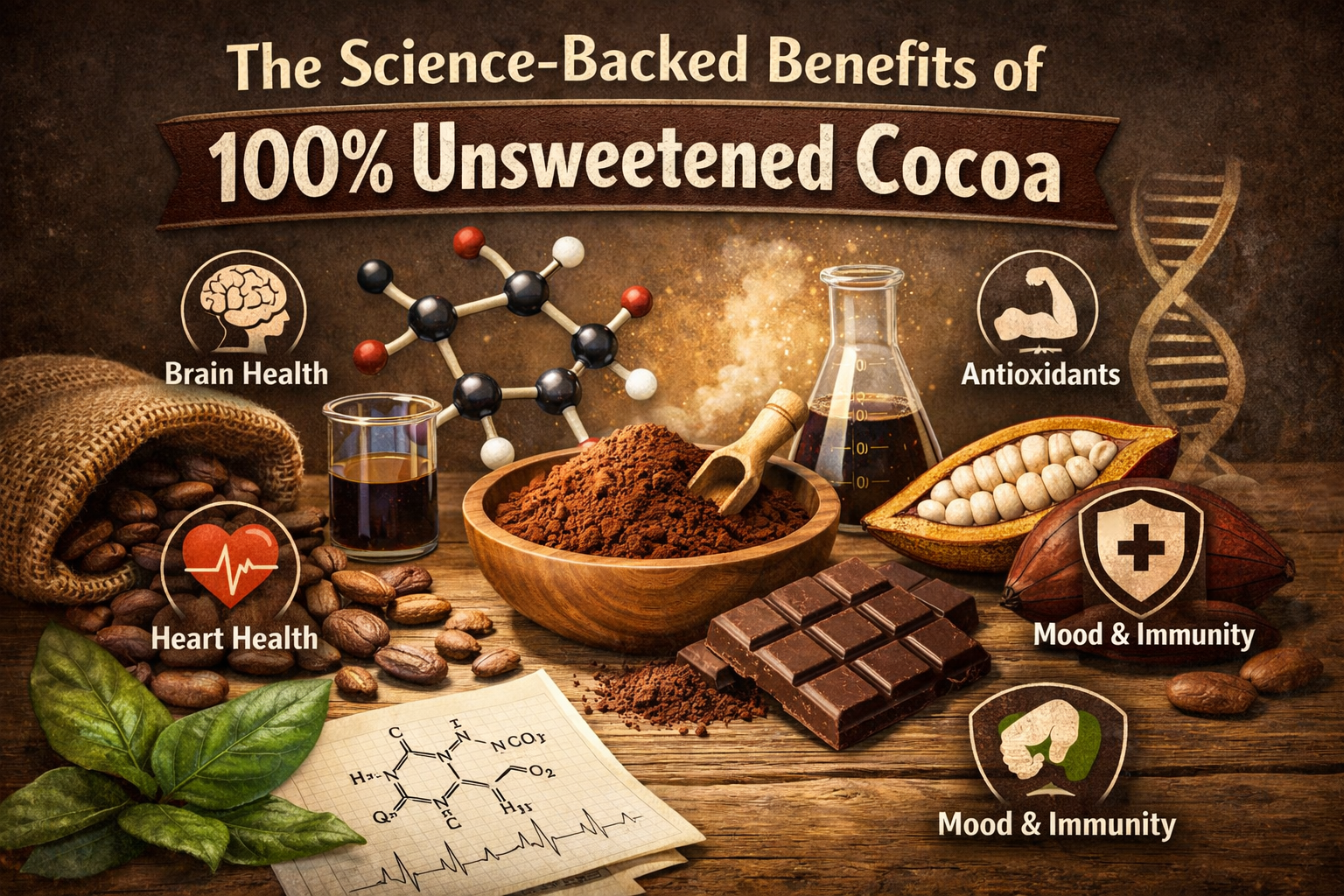
Cocoa has been used as a medicinal food for thousands of years. Long before chocolate became a dessert, ancient cultures consumed pure cacao as a bitter drink to support energy, endurance, circulation, and vitality. Modern research now confirms what those cultures intuitively understood: pure, unsweetened cocoa is one of the most concentrated sources of beneficial plant compounds in the human diet.
However, not all cocoa — and certainly not all chocolate — provides these benefits.
This article explains:
• why 100% unsweetened cocoa matters
• why organic, non-alkalized cocoa is critical
• how cocoa supports metabolism, brain function, circulation, and skin health
• how much cocoa is beneficial over 3, 6, and 12 months
• and which foods amplify cocoa’s effects
When people hear that “chocolate is healthy,” confusion follows. Most chocolate products — including milk chocolate and many dark chocolate bars — contain sugar, dairy, emulsifiers, and heavily processed cocoa. These additions raise blood sugar and inflammation, which can cancel out cocoa’s physiological benefits.
The real benefits of cocoa come from flavanols, a class of polyphenols (protective plant compounds) found naturally in cacao beans. Flavanols are responsible for cocoa’s ability to support:
• blood sugar regulation
• circulation and blood vessel health
• brain blood flow
• inflammation control
Unfortunately, many cocoa powders are alkalized (Dutch-processed) to reduce bitterness. This process destroys up to 90% of flavanol content, dramatically reducing benefits.
For health purposes, cocoa should be:
• 100% unsweetened
• non-alkalized
• minimally processed
Yes — especially for people using cocoa regularly.
Cacao plants readily absorb heavy metals such as lead and cadmium from soil. While organic certification does not guarantee zero contamination, it significantly reduces pesticide exposure and is often associated with better soil practices and sourcing transparency. For long-term daily intake, organic cocoa is the safer choice.
Organic cocoa is more likely to be minimally processed, helping preserve flavanols and other polyphenols that drive cocoa’s metabolic, vascular, and skin-supportive benefits.
Metabolic flexibility refers to your body’s ability to efficiently switch between burning carbohydrates and fat for energy. When metabolic flexibility is impaired, people experience blood sugar swings, energy crashes, and stubborn weight gain.
Cocoa flavanols improve insulin signaling and glucose uptake, making it easier for cells to use fuel properly. Over time, this supports steadier energy, improved blood sugar control, and better fat metabolism.
Cocoa increases nitric oxide production, which relaxes blood vessels and improves circulation. This allows more oxygen and nutrients to reach tissues — including the brain.
Brain oxygenation refers to how effectively oxygen-rich blood reaches brain cells. Improved circulation supports focus, memory, mood regulation, and mental clarity, especially as we age.
Executive function includes higher-level cognitive skills such as decision-making, emotional regulation, planning, attention, and problem-solving. Improved blood flow and reduced oxidative stress in the brain support these functions over time.
One of the most overlooked benefits of 100% organic, non-alkalized cocoa is its impact on skin health.
Skin aging is driven not only by collagen loss, but by:
• chronic inflammation
• oxidative stress
• impaired circulation
• weakened skin barrier
• mitochondrial damage within skin cells
Cocoa directly influences all of these pathways.
By increasing nitric oxide, cocoa improves blood flow to the skin. Better circulation means more oxygen and nutrients reach skin cells, supporting healthier tone, elasticity, and repair. This is why consistent cocoa intake is often associated with a subtle, healthy glow.
Cocoa polyphenols help neutralize free radicals generated by UV exposure, pollution, and blood sugar spikes. This helps slow collagen and elastin breakdown and reduces premature wrinkle formation. Non-alkalized cocoa is essential here, as alkalization destroys many of these protective compounds.
Inflammation weakens the skin barrier, increasing dryness and sensitivity. Cocoa flavanols help calm inflammatory signaling, supporting improved hydration, barrier resilience, and reduced skin reactivity over time.
Inflammatory cytokines are chemical messengers that drive redness, irritation, and accelerated skin aging when chronically elevated. Cocoa polyphenols help reduce these inflammatory signals, supporting calmer, more resilient skin.
Mitochondria are the energy-producing structures inside cells, including skin cells. When mitochondria are damaged, skin repair slows and texture declines. Cocoa’s antioxidant compounds help protect mitochondrial function, supporting healthier skin turnover and long-term resilience.
Research consistently shows benefits at modest, consistent doses.
Effective daily amount:
1–2 tablespoons of 100% unsweetened cocoa powder per day
(approximately 5–10 grams)
More is not better. Consistency matters more than quantity.
Common observations include:
• improved circulation (warm hands and feet)
• steadier energy
• improved post-meal blood sugar response
• subtle improvements in mood, focus, and skin hydration
Benefits deepen and stabilize:
• improved insulin sensitivity
• improved blood pressure markers
• better exercise tolerance
• calmer skin tone and improved texture
• improved stress resilience and mental clarity
Long-term intake is associated with:
• sustained cardiovascular support
• improved metabolic aging markers
• reduced chronic inflammation
• stronger skin barrier and slower visible aging
• improved cognitive resilience with aging
At this point, cocoa functions as part of a longevity nutrition strategy, not a short-term intervention.
For meaningful benefits:
• Daily or at least 5 days per week
• Regular intake is more important than occasional large doses
Provides complementary polyphenols that support gut health, blood sugar control, and brain signaling.
Enhances anti-inflammatory and mitochondrial benefits. A pinch of black pepper improves turmeric absorption.
Supports digestion, circulation, and insulin sensitivity, making it especially helpful for metabolic health.
Pairing cocoa with coconut milk, ghee, collagen, or MCT oil improves absorption and blood sugar stability.
For consistent results, choose cocoa that is:
• organic
• unsweetened
• non-alkalized
• free from additives
A delicious, high-quality option is Viva Naturals Organic Cacao Powder, which offers rich flavor and clean ingredients without sugar, additives, or heavy processing.
Viva Naturals 100% Organic Cacao Powder
Cocoa is not a treat food when used correctly — it is a functional, therapeutic food. When sourced properly and consumed consistently, it supports metabolic health, circulation, brain function, skin aging, inflammation control, and longevity.
The key is simplicity:
• 100% unsweetened
• organic
• non-alkalized
• modest daily intake (1 TBSP)
• paired with supportive foods
Used this way, cocoa becomes a powerful — and enjoyable — part of a long-term wellness routine.