Why the Dietary Guidelines Matter
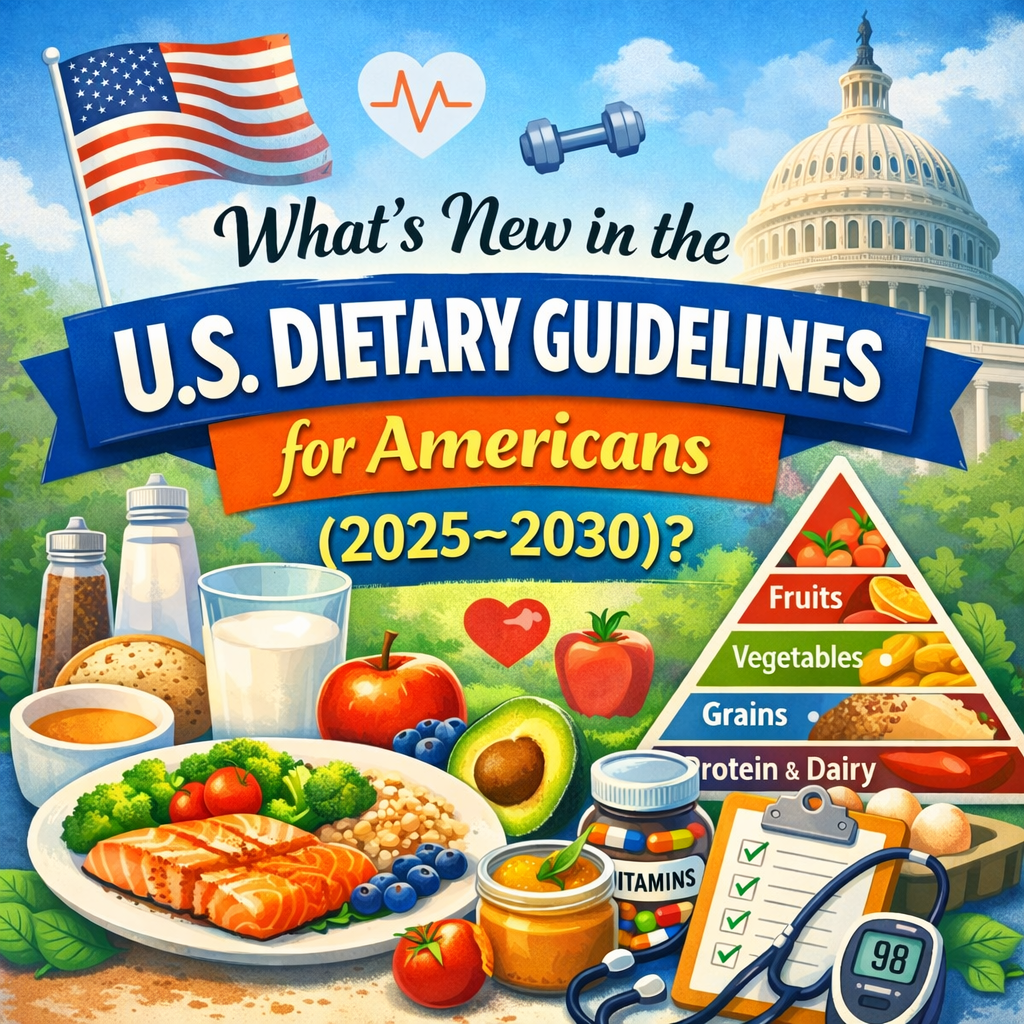
The 2025–2030 Dietary Guidelines for Americans (DGAs), released by the U.S. Department of Agriculture and the U.S. Department of Health and Human Services, shape far more than personal nutrition advice.
One-line takeaway: These Guidelines influence what millions of Americans eat—whether they realize it or not.
They guide:
- School breakfast and lunch programs
- Federal food assistance programs like SNAP and WIC
- Military and institutional food standards
- Public health messaging and clinical nutrition advice
Updated every five years, the DGAs aim to reflect the best available nutrition science while addressing chronic disease risk, which now affects over half of U.S. adults.
Big Picture Theme of the 2025–2030 Guidelines
One-line takeaway: This edition shifts away from nutrients in isolation and back toward real food patterns.
The overarching messages include:
- Greater emphasis on whole and minimally processed foods
- Clearer language around protein quality
- Stronger discouragement of highly processed foods
- Continued limits on added sugars, sodium, and refined carbohydrates
- A life-course approach, from infancy through older adulthood
1. Protein: Quality, Variety, and Adequacy
One-line takeaway: Protein is no longer an afterthought—it’s a centerpiece.
The Guidelines emphasize consuming nutrient-dense protein foods at every meal, recognizing protein’s role in:
- Muscle maintenance and aging
- Metabolic health
- Satiety and weight regulation
- Micronutrient intake (iron, zinc, B vitamins)
Recommended Protein Sources
- Animal-based:
- Eggs
- Poultry
- Seafood
- Lean cuts of meat
- Plant-based:
- Beans, lentils, peas
- Soy foods
- Nuts and seeds
Why This Matters
- Many Americans underconsume protein at breakfast
- Older adults may need higher protein density
- Protein quality affects amino acid availability and nutrient absorption
Supporting research:
https://pubmed.ncbi.nlm.nih.gov/?term=protein+intake+health
2. Stronger Language on Highly Processed Foods
One-line takeaway: Not all calories are created equal—and the Guidelines now say so more clearly.
For the first time, the DGAs explicitly recommend reducing highly processed foods, particularly those that are:
- High in added sugars
- High in refined carbohydrates
- High in sodium
- Low in fiber and micronutrients
Examples Commonly Overconsumed
- Packaged baked goods
- Sugary snacks and desserts
- Sugar-sweetened beverages
- Ready-to-eat convenience foods
Why Processing Matters
- Ultra-processed foods are linked to higher energy intake
- They are associated with increased risk of obesity, cardiovascular disease, and metabolic disorders
- Processing often alters food structure, affecting satiety and glycemic response
Supporting research:
https://www.nature.com/articles/s41591-022-02153-6
3. Added Sugars: Clearer, Firmer Limits
One-line takeaway: Added sugar is framed as unnecessary—not just “okay in moderation.”
The Guidelines reiterate that:
- Added sugars should be kept as low as possible
- Children under four should avoid added sugars entirely
- Sugar-sweetened beverages remain a major dietary risk factor
Health Concerns Linked to Added Sugar
- Increased cardiovascular disease risk
- Poor metabolic health
- Displacement of nutrient-dense foods
- Increased caloric intake without satiety
Supporting research:
https://jamanetwork.com/journals/jama/fullarticle/2789367
4. Fat Guidance: Quality Over Quantity
One-line takeaway: The “low-fat” era continues to fade.
Rather than focusing on total fat reduction, the DGAs emphasize fat quality, encouraging fats from whole food sources.
Encouraged Fat Sources
- Olive oil and unsaturated oils
- Nuts and seeds
- Avocados
- Full-fat dairy without added sugars
Still Limited
- Industrial trans fats
- Excess saturated fat (kept below 10% of total calories)
Why This Shift Matters
- Different fats have different physiological effects
- Unsaturated fats support cardiovascular health
- Whole-food fat sources often come with additional nutrients
Supporting research:
https://www.nejm.org/doi/full/10.1056/NEJMra023858
5. Fruits and Vegetables: Still the Foundation
One-line takeaway: If nutrition advice had a constant, this would be it.
The DGAs continue to recommend:
- A wide variety of fruits and vegetables
- Emphasis on color and diversity
- Higher intake across all age groups
Benefits of Higher Intake
- Reduced risk of cardiovascular disease
- Improved gut health
- Higher fiber and antioxidant intake
- Better overall dietary quality
Supporting research:
https://www.cdc.gov/nutrition/strategies-guidelines/fruit-vegetable-intake.html
6. Whole Grains Over Refined Grains
One-line takeaway: Fiber matters—and whole grains deliver it.
The Guidelines encourage:
- Choosing whole grains most often
- Limiting refined grains that lack fiber and micronutrients
Why Whole Grains Are Emphasized
- Improved cholesterol levels
- Better glycemic control
- Lower cardiovascular risk
Supporting research:
https://academic.oup.com/ajcn/article/102/1/83/4564648
7. A Life-Course Approach to Nutrition
One-line takeaway: Nutrition needs change—and the Guidelines now reflect that more clearly.
The DGAs recognize:
- Early childhood nutrition influences lifelong health
- Adolescence and adulthood have distinct nutrient needs
- Aging populations require attention to protein, bone health, and nutrient density
This approach aligns with long-term evidence linking early dietary patterns to chronic disease risk later in life.
Scientific Debate and Ongoing Discussion
One-line takeaway: Nutrition policy is science—but also interpretation.
Some researchers and public health experts have raised concerns about:
- Greater emphasis on animal-based protein and full-fat dairy
- Challenges staying within saturated fat limits
- Differences between advisory committee findings and final policy language
These debates highlight the tension between evolving science, policy translation, and public messaging.
How to Apply the Guidelines Practically
Simple, evidence-aligned strategies:
- Build meals around vegetables, fruits, and whole grains
- Include a high-quality protein source at meals
- Choose fats from whole foods
- Reduce ultra-processed snacks and sugary drinks
- Prioritize home-prepared meals when possible
Conclusion
One-line takeaway: The 2025–2030 Dietary Guidelines reinforce the basics—while sharpening their stance on food quality.
By emphasizing whole foods, protein adequacy, healthy fats, and reduced processing, the Guidelines reflect both long-standing nutrition principles and emerging research. As with all nutrition guidance, individual needs, preferences, and health context remain essential.