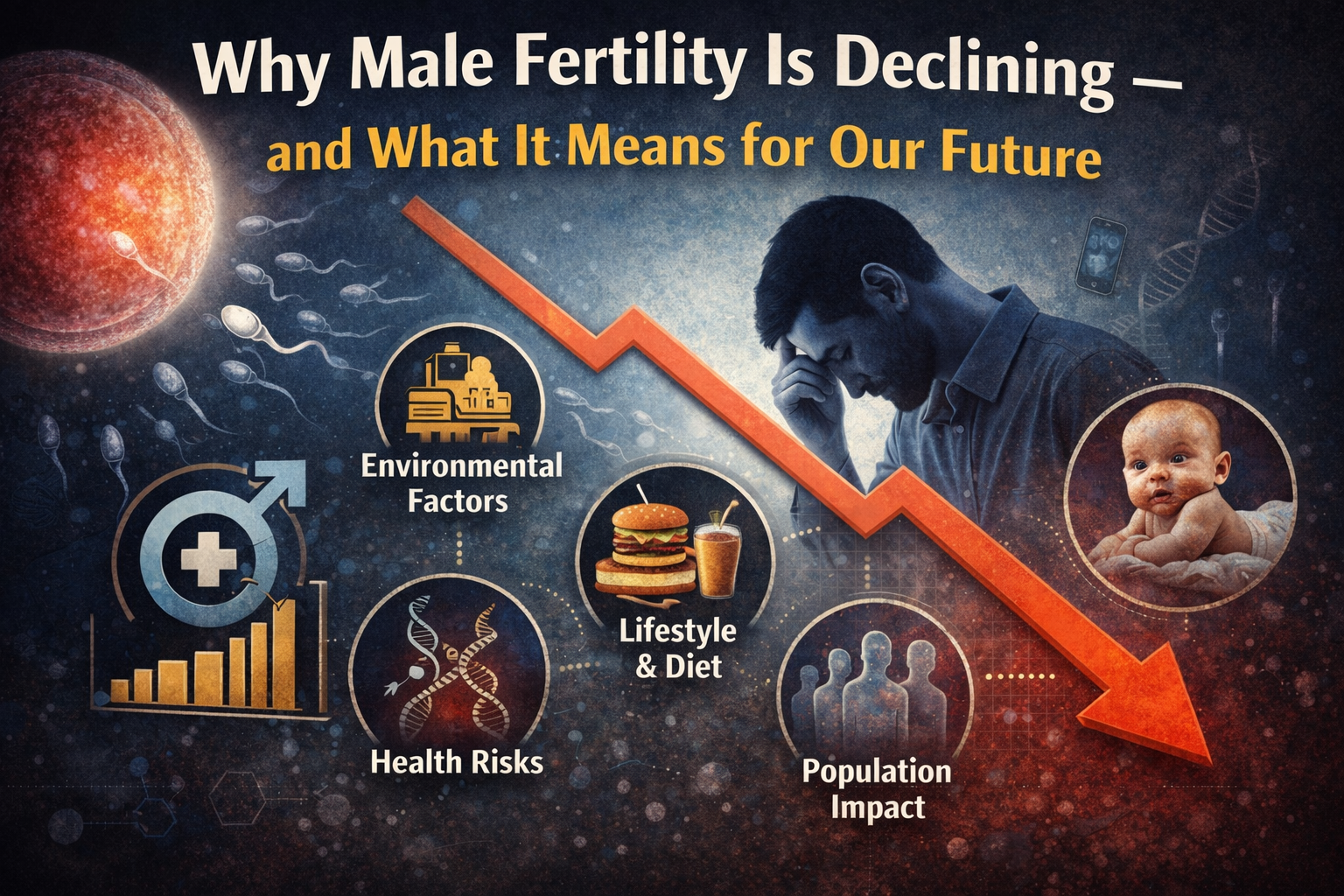
Male fertility is declining at an unprecedented rate, and the data is no longer subtle. Sperm counts are dropping, testosterone levels are falling, and male reproductive disorders are rising worldwide. This is not a niche fertility issue — it is a global public health concern with long-term consequences for families, population health, and future generations.
For decades, fertility conversations focused almost exclusively on women. But modern research makes one thing clear: male fertility decline is real, measurable, and accelerating.
The Evidence Behind the Male Fertility Crisis
One of the most comprehensive analyses on sperm count decline was published in Human Reproduction Update and led by Shanna Swan, PhD. This meta-analysis examined data from nearly 43,000 men across North America, Europe, Australia, and New Zealand.
The findings were alarming:
- Sperm concentration declined by over 50% between 1973 and 2011
- Total sperm count declined by nearly 60%
- The rate of decline accelerated after the year 2000
More recent studies suggest the downward trend continues today.
Importantly, this decline is not limited to sperm quantity. Researchers also report:
- Reduced sperm motility
- Increased sperm DNA fragmentation
- Higher rates of abnormal sperm morphology
These changes significantly impair male fertility, even when sperm counts fall within “normal” laboratory ranges.
Why Sperm Health Reflects Overall Male Health
Male fertility is often treated as a reproductive issue, but sperm health is actually a biomarker of systemic health.
Research consistently links poor sperm quality with:
- Increased cardiovascular disease risk
- Metabolic dysfunction and insulin resistance
- Chronic inflammation
- Hormonal imbalance
- Higher all-cause mortality
In other words, declining sperm health reflects deeper physiological stress affecting the entire body.
What Is Causing Male Fertility Decline?
Endocrine Disruptors and Hormone Disruption
One of the strongest contributors to declining male fertility is widespread exposure to endocrine-disrupting chemicals.
These chemicals interfere with testosterone production, sperm development, and androgen signaling. Common sources include:
- Phthalates found in plastics and fragrances
- BPA and BPS used in food packaging and receipts
- Pesticides and herbicides such as glyphosate
- PFAS and flame retardants found in household products
Exposure often begins before birth, permanently altering testicular development and sperm production later in life.
Testosterone Decline in Men
Testosterone levels in men have been steadily declining for decades — even when age and lifestyle factors are accounted for.
Low testosterone is strongly associated with:
- Reduced sperm production
- Poor sperm motility
- Erectile dysfunction
- Loss of muscle mass
- Increased visceral fat
- Depression and fatigue
Many young men today present with testosterone levels once considered abnormally low for their age.
Metabolic Dysfunction and Insulin Resistance
Metabolic health plays a critical role in male fertility.
Insulin resistance and obesity impair fertility by:
- Increasing conversion of testosterone into estrogen
- Creating chronic inflammation in reproductive tissues
- Increasing oxidative stress that damages sperm DNA
- Disrupting mitochondrial function required for sperm motility
Even mild blood sugar dysregulation can negatively impact sperm quality long before diabetes develops.
Nutrient Deficiencies and Modern Diets
Sperm production is nutrient-intensive, yet modern diets are increasingly depleted of key micronutrients.
Nutrients essential for male fertility include:
- Zinc for testosterone synthesis
- Selenium for sperm motility
- Folate for DNA integrity
- Omega-3 fatty acids for sperm membrane structure
- Antioxidants to protect sperm from oxidative damage
Ultra-processed foods provide calories without the biological raw materials needed for reproduction.
Sleep Deprivation and Chronic Stress
Testosterone production follows a circadian rhythm, peaking during deep sleep.
Chronic sleep deprivation:
- Suppresses testosterone
- Elevates cortisol
- Impairs insulin sensitivity
- Reduces sperm count and motility
Psychological stress further suppresses the hypothalamic-pituitary-gonadal axis, compounding fertility decline.
Heat Exposure and Modern Lifestyle Factors
Sperm production requires precise temperature regulation.
Common contributors to testicular overheating include:
- Prolonged sitting
- Tight clothing
- Laptops placed on the lap
- Heated car seats
- Frequent sauna or hot tub use
While not the primary driver, these factors worsen existing fertility stress.
The Epigenetic Impact on Future Generations
Sperm carries not only genetic information, but epigenetic instructions that influence:
- Metabolic health
- Immune function
- Neurodevelopment
- Disease risk in offspring
Poor sperm quality today increases the risk of chronic disease in future generations, including obesity, diabetes, and hormonal dysfunction.
Male fertility decline is not just about the ability to conceive — it shapes the long-term health of children and grandchildren.
Societal Consequences of Declining Male Fertility
The broader effects of male fertility decline are already visible:
- Rising infertility rates and increased IVF reliance
- Declining birth rates in developed nations
- Higher healthcare costs tied to chronic disease
- Workforce shortages and economic strain
This is not an individual issue — it is a population-level challenge.
Can Male Fertility Be Improved?
The encouraging news is that sperm regenerates approximately every 74 to 90 days, making male fertility highly responsive to intervention.
Evidence-based strategies include:
- Reducing exposure to endocrine-disrupting chemicals
- Stabilizing blood sugar and improving metabolic health
- Prioritizing protein and micronutrient-dense foods
- Supporting liver detoxification pathways
- Improving sleep quality and circadian rhythm
- Managing stress and cortisol
- Strength training and regular movement
- Targeted supplementation when appropriate
When addressed early, sperm quality can improve significantly within months.
The Bigger Picture
Male fertility decline is not a failure of individual men. It reflects a modern environment that disrupts hormones, metabolism, and biological resilience.
Fertility is inseparable from metabolic health. Hormones do not operate in isolation. And the choices we make today determine the health of future generations.
Ignoring the decline in male fertility is no longer an option.