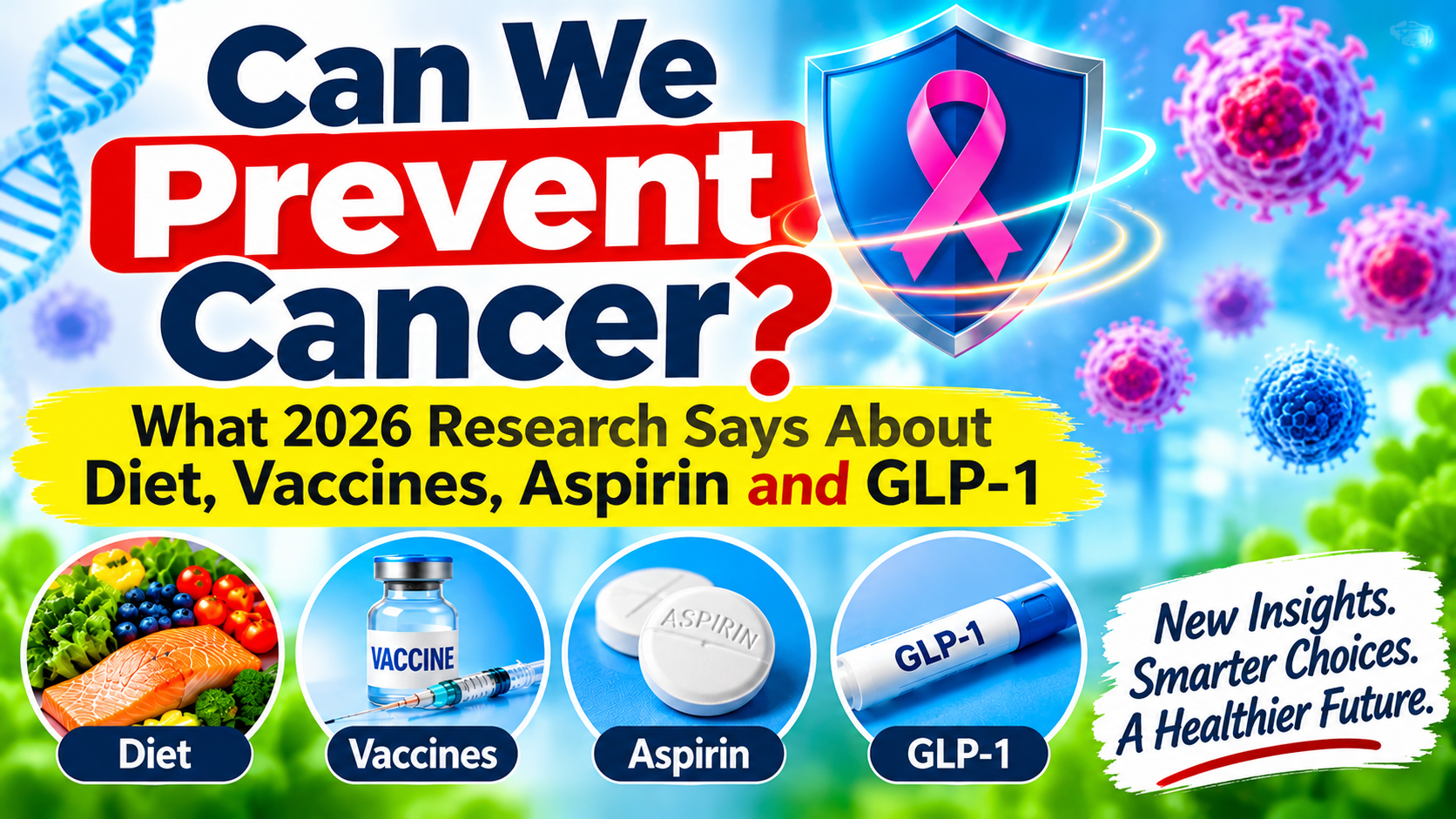
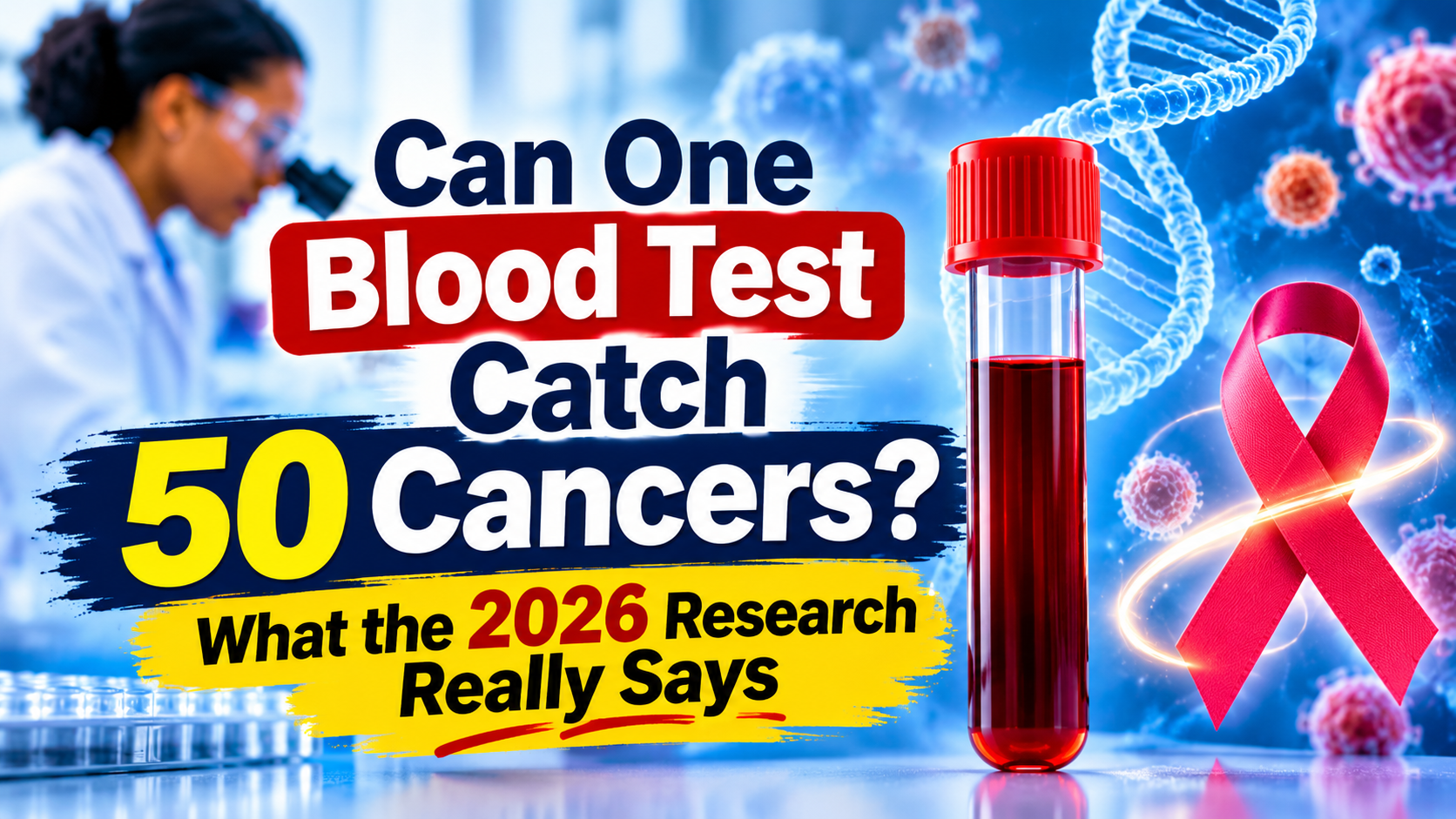
Some of the best cancer prevention tools are decades old, and some of the newest are still unproven. Here’s what the research shows, in plain English.
Why cancer is rising in younger adults
Cancer death rates in the U.S. fell 34% between 1991 and 2022. But diagnoses are shifting toward younger adults and women. Women under 50 now have an 82% higher cancer rate than men the same age, up from 51% in 2002. Colorectal cancer in people under 50 rose about 2.4% a year from 2012 to 2022.
Nobody fully knows why. A 2025 study in Nature offered a new clue. Researchers analyzed 981 colorectal cancers from 11 countries and found DNA damage from colibactin, a toxin made by certain gut E. coli strains. These mutations were 3.3 times more common in people diagnosed before 40 than after 70, and the damage likely happened in early childhood. It’s an association, not proof, but it points to the gut microbiome as a possible early-life factor.
What diet research shows
-
Processed meat. The World Health Organization’s cancer agency classifies bacon, hot dogs, ham and deli meats as a definite cause of colorectal cancer. Each 50-gram daily serving, about one hot dog, is linked to an 18% higher risk. The risk for any one person is small, but it grows with how much you eat.
-
Sugary drinks. In a Harvard study of about 95,000 women, two or more sugary drinks a day was linked to more than double the risk of early-onset colorectal cancer. Sugary drinks in the teen years stood out the most. Swapping them for coffee, milk or diet drinks was linked to a 17–36% lower risk.
-
Body weight. Excess weight is linked to 13 cancers, including colorectal, breast, uterine and pancreatic. Inflammation, hormones and high insulin levels all seem to play a role.
Vaccines: prevention that’s already working
HPV. Scotland began vaccinating 12- and 13-year-old girls in 2008. A 2024 study found zero cervical cancer cases in women fully vaccinated at that age. Women vaccinated later, at 14 to 22, still saw rates drop from 8.4 to 3.2 per 100,000. The vaccine doesn’t cover every HPV type, so cervical screening still matters.
Hepatitis B. Taiwan launched the world’s first universal newborn hepatitis B vaccination in 1984. Liver cancer rates in young people fell from about 0.92 to 0.23 per 100,000, roughly a 75% drop.
Aspirin: it depends on who you are
Aspirin is the most studied cancer-prevention drug, and the results show why prevention is becoming personal.
-
People with Lynch syndrome, an inherited condition that raises colorectal cancer risk, who took aspirin for about two years had fewer colorectal cancers: 9% vs 13%. The benefit lasted up to 20 years.
-
Colorectal cancer patients whose tumors carry PI3K mutations saw their risk of the cancer coming back cut roughly in half with low-dose aspirin, in a 2025 trial. About 37% of patients had these mutations.
-
Healthy adults 70 and older got no cancer protection from daily aspirin and had a 15% higher risk of cancer death in a large trial.
Aspirin also carries bleeding risks, so don’t start it for cancer prevention without your doctor.
GLP-1 drugs: exciting but early
GLP-1 medications like semaglutide (Ozempic, Wegovy) and tirzepatide (Mounjaro, Zepbound) were a major theme at cancer conferences in 2026.
-
People on GLP-1s were 36% less likely to develop colorectal cancer than people on aspirin, in a large health-records study. But more than 2,000 people would need to take one to prevent a single case.
-
Women aged 45 to 80 on GLP-1s were about 30% less likely to develop breast cancer, in another analysis.
-
Possible reasons include lower insulin levels, less inflammation and weight loss.
The catch: nearly all of this comes from looking back at records, not randomized trials. People who get these drugs may differ in ways that are hard to account for. The drugs are not approved to prevent cancer, and the American Cancer Society says not to take them just for that reason.
The insulin connection
High insulin levels keep showing up in cancer research. In mouse studies, insulin spikes helped tumors resist a class of cancer drugs called PI3K inhibitors, and keeping insulin low made those drugs work better. That’s mouse research, not proof in people. But it’s one reason scientists want to test whether metabolic drugs like GLP-1s could someday be paired with cancer treatment in proper clinical trials.
What to do with this
-
Vaccinate. Ask your child’s or grandchild’s doctor about the HPV vaccine at the recommended preteen age, and check your own hepatitis B status.
-
Eat for your colon. Limit processed meat and sugary drinks, especially for kids and teens. Limit alcohol and stay active.
-
Know your risk. Family history and genetic testing can change what prevention makes sense for you, including whether aspirin is worth discussing.
-
Don’t self-prescribe. Talk with your doctor before starting aspirin or a GLP-1 for cancer prevention.
Want the full story? Episode 2 of The Larson Health Podcast walks through every study in detail. Watch and subscribe on YouTube at @Thecoachkimlarson. Next up: personalized mRNA cancer vaccines and the advances reshaping treatment.
This post is for education, not medical advice.
Brought to you by Larson Nutrition, personalized metabolic health coaching that starts with a free health assessment, and Larson Botanicals, small-batch organic skincare and soy-coconut candles made for sensitive skin.
Sources