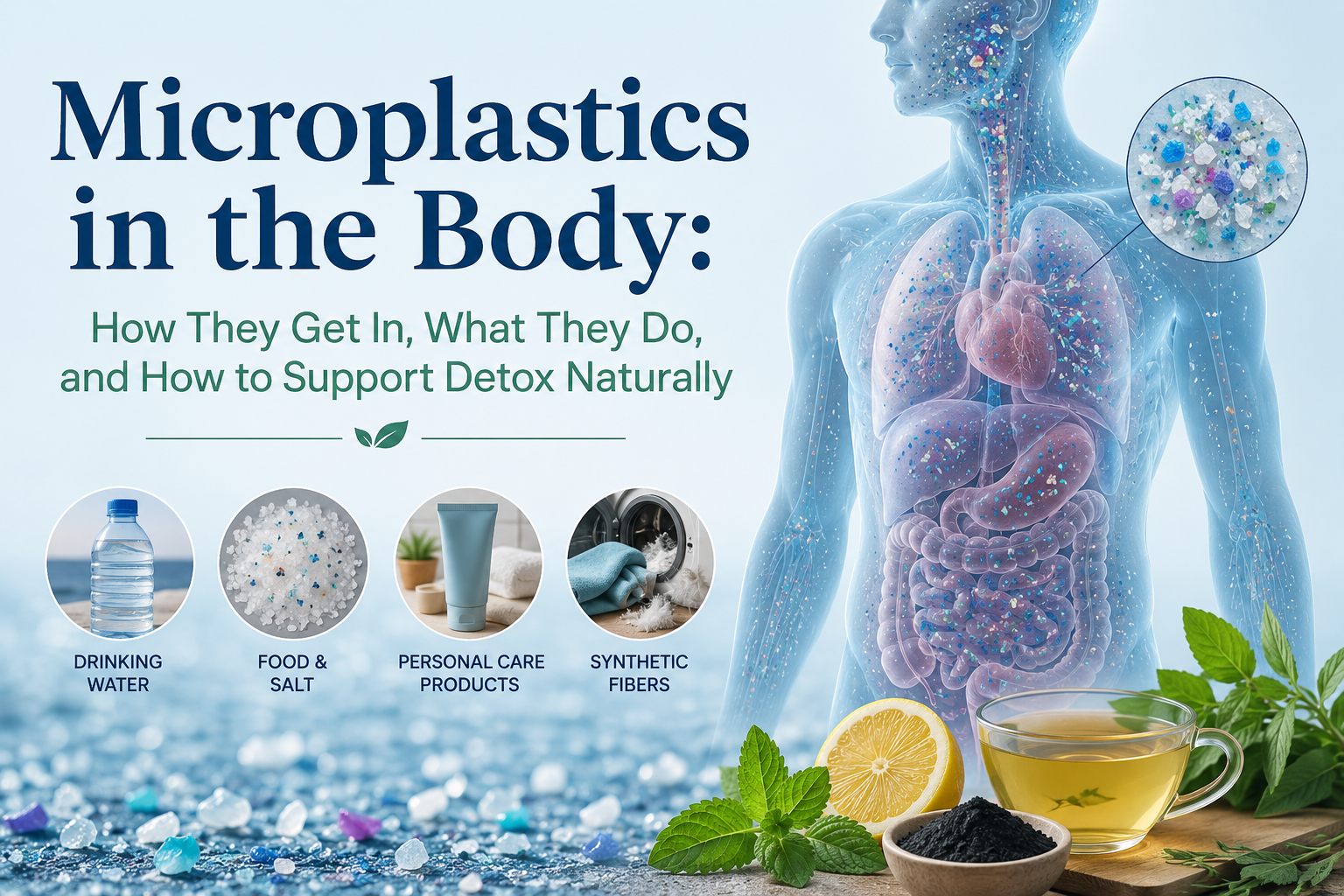
Microplastics in the Body: How They Get In, What They Do, and How to Support Detox Naturally

Microplastics are now found in the human body—but what does that mean for your health? Learn how plastics enter your system, their impact, and science-backed ways to support detoxification naturally.

The Plastic Problem No One Is Talking About

We are living in a world where plastic is no longer just in the environment—it’s in us.

Microplastics, defined as tiny plastic particles smaller than 5 millimeters, are now being detected in human blood, organs, and even the placenta.

And while the research is still evolving, what we do know is enough to pause and pay attention.

These particles don’t just sit there harmlessly. They can carry toxic chemicals like BPA, phthalates, and PFAS—compounds linked to hormone disruption, inflammation, and chronic disease.

From a functional medicine perspective, this isn’t just an environmental issue—it’s a metabolic and hormonal health issue.

How Plastics Get Into Your Body (Daily Exposure You Don’t See)

Microplastics enter your body through three primary pathways:

Food

  • Packaged foods
  • Seafood (especially shellfish)
  • Processed foods exposed to plastic during manufacturing

Water

  • Bottled water (one of the worst sources)
  • Tap water without filtration

Air

  • Synthetic fibers: 
  • Polyester – activewear, leggings, fleece, blankets
  • Nylon – workout clothes, hosiery, swimwear
  • Acrylic – sweaters, scarves (often marketed as “wool-like”)
  • Spandex / Elastane / Lycra – stretch fabrics (almost all leggings, bras)
  • Polypropylene – athletic base layers, thermal wear
  • Polyethylene – sometimes used in performance fabrics
  • Household dust
  • Indoor air pollution

Once inside, smaller particles (nanoplastics) can cross into the bloodstream and even enter cells.

That’s when they can start influencing inflammation, oxidative stress, and potentially long-term disease risk.

What Do Microplastics Do to the Body?

Emerging research suggests microplastics may:

  • Trigger chronic inflammation
  • Disrupt hormones (endocrine disruption)
  • Increase oxidative stress
  • Interfere with gut microbiome balance
  • Potentially impact fertility and cardiovascular health

Some studies even show associations between microplastics in arterial plaque and increased cardiovascular risk, though more research is needed.

And here’s the key point your audience needs to hear:

There is currently NO proven way to fully remove microplastics from tissues once they are embedded.

Which means…

👉 The focus becomes:

  • Reducing exposure
  • Supporting the body’s natural detox pathways

Can You Detox Microplastics? What the Science Actually Says

There is no magic detox.

But there are mechanisms in the body that help eliminate what we can:

  • Bowel movements (primary route)
  • Liver detox pathways
  • Sweat (minor role)

Some microplastics pass through the digestive system and are excreted, but smaller particles may remain in tissues.

So instead of “detoxing plastics,” we shift to:

“Supporting elimination + reducing accumulation.”

The Most Powerful Tool: Fiber (Backed by Research)

Emerging research shows that fiber may play a key role in removing plastic-associated toxins.

Gel-forming fibers can bind to “forever chemicals” (PFAS) and help carry them out of the body through stool.

In fact:

  • One study showed measurable reductions in PFAS levels after just 4 weeks of fiber intake

This is HUGE.

Why Fiber Works

  • Binds toxins in the gut
  • Supports bile production (which carries toxins out)
  • Improves bowel regularity
  • Supports microbiome health

Best Fiber Sources

  • Chia seeds 
  • Flax seeds
  • Vegetables (especially cruciferous like broccoli, brussels sprouts)
  • Berries
  • Psyllium husk (therapeutic use)

Probiotic Support

Probiotics are live microorganisms that help maintain balance within the gut microbiome. Emerging research suggests that certain strains may interact with environmental toxins in the digestive tract, potentially influencing how they are processed and eliminated.

While human research on microplastics is still developing, probiotic support may contribute to overall gut resilience and detoxification capacity.

Common probiotic strains studied for gut and immune support include:

  • Lactobacillus rhamnosus
  • Lactobacillus plantarum
  • Lactobacillus acidophilus
  • Bifidobacterium longum
  • Bifidobacterium bifidum

These strains have been associated with benefits such as supporting intestinal barrier integrity, modulating inflammation, and improving microbial balance.

Food-based sources of probiotics include:

  • Kefir
  • Yogurt with live active cultures
  • Sauerkraut
  • Kimchi
  • Fermented vegetables
  • Sourdough bread is often confused with a probiotic food because of its fermentation process. While it does contain beneficial bacteria during preparation, the baking process eliminates these live microbes. However, sourdough still offers gut-supportive benefits through improved digestibility and prebiotic compounds that help nourish beneficial gut bacteria.

Supplementation may be considered when dietary intake is insufficient or when targeted support is needed. Broad-spectrum probiotic formulations containing multiple strains are commonly used to support overall gut health.

Gut Repair Protocols

Gut repair focuses on restoring the integrity of the intestinal lining and supporting the body’s ability to regulate what is absorbed into the bloodstream. This is particularly relevant in the context of environmental exposures, as a compromised gut barrier may allow greater passage of unwanted compounds.

A comprehensive gut support approach often includes the following components:

Nutritional Support

  • Adequate protein intake to support tissue repair
  • Micronutrients such as zinc and vitamin A for epithelial health
  • Omega-3 fatty acids for inflammation regulation

Targeted Compounds

  • L-glutamine, an amino acid that serves as a primary fuel source for intestinal cells
  • Collagen or gelatin, which provide structural amino acids
  • Butyrate or butyrate-supporting foods (fiber-rich foods that feed beneficial bacteria)

Digestive Support

  • Supporting stomach acid and enzyme production to ensure proper breakdown of food
  • Reducing undigested food particles that may contribute to gut irritation

Microbiome Balance

  • Incorporating probiotic foods or supplements
  • Increasing prebiotic fiber from foods such as onions, garlic, leeks, asparagus, and oats

Lifestyle Factors

  • Managing chronic stress, which can impair gut barrier function
  • Prioritizing sleep, which plays a role in immune and digestive health
  • Regular physical activity to support circulation and metabolic function

Together, these strategies support the structure and function of the gut lining, helping regulate absorption and elimination processes that are essential for overall health.

Lymphatic Support: Where Dry Brushing Fits In

The lymphatic system is your body’s waste drainage network.

It helps move:

  • Cellular waste
  • Toxins
  • Immune debris

While there is no direct research proving dry brushing removes microplastics, we do know:

  • Movement stimulates lymph flow
  • Skin brushing may support circulation
  • Sweating supports detox pathways

From a functional lens:

Dry brushing = supportive habit, not a primary detox method

Pair it with:

  • Walking
  • Strength training
  • Sauna or sweating

Simple Ways to Reduce Plastic Exposure (High Impact Changes)

This is where behavior change happens.

1. Stop Heating Food in Plastic

Heat dramatically increases chemical leaching.

2. Switch to Filtered Water

Filtered water helps reduce intake and supports elimination.

3. Use Glass, Stainless Steel, or Cast Iron

Especially for:

  • Cooking
  • Storage
  • Drinking

4. Reduce Ultra-Processed Foods

They have the highest plastic exposure during production.

5. Improve Indoor Air Quality

  • HEPA filters
  • Reduce synthetic fabrics

Antioxidants: Your Defense System

While you may not remove every plastic particle…

You can reduce the damage.

Antioxidants like:

  • Vitamin C
  • Vitamin E
  • Polyphenols (berries, olive oil)

Help counter:

  • Oxidative stress
  • Inflammation

The Functional Medicine Perspective 

This isn’t about fear.

It’s about control.

We can’t eliminate plastics completely—but we can:

  • Strengthen detox pathways
  • Improve gut health
  • Reduce daily exposure
  • Support metabolic resilience

Because at the end of the day…

A resilient body handles toxins better than a depleted one.

Final Takeaway

Microplastics are a modern reality.

But your body is not powerless.

When you focus on:

  • Fiber
  • Gut health
  • Clean food
  • Smart lifestyle swaps

You are actively lowering your toxic burden every single day.

And if you want support on helping to clean up your environment, reach out to me, I’m here to support you and this is why I created LarsonBotanicals.com to help reduce the plastic and toxic exposure.
 

Leave a Reply

Your email address will not be published. Required fields are marked *

Related Post

Microplastics in the Body: How They Get In, What They Do, and How to Support Detox Naturally
Vegan Buddha Bowl
Microplastics in the Body: How They Get In, What They Do, and How to Support Detox Naturally
Savory Egg White & Veggie Breakfast Muffins
Savory Mushroom and Chicken Soup
Mixed Italian Salad
The Strength Training Rule That Matters Most, According to 137 Studies
Simple Turkey Fried Rice
Hard-Boiled Eggs
NAD, Metabolic Flexibility, and the Cellular Energy Story Behind Healthy Aging
Open-Faced Cranberry Walnut Chicken Salad Sandwich
Simple Shrimp and Grits
Can Eyes Regenerate? The Science Behind Vision Repair and Eye Health
Egg White Scramble with Spinach and Cottage Cheese
Crab Cakes
Norwegian 4×4 Workout: The Easiest High-Impact Workout to Boost Heart Health
Ground Beef Taco Bowls
Chocolate Hazelnut Truffles