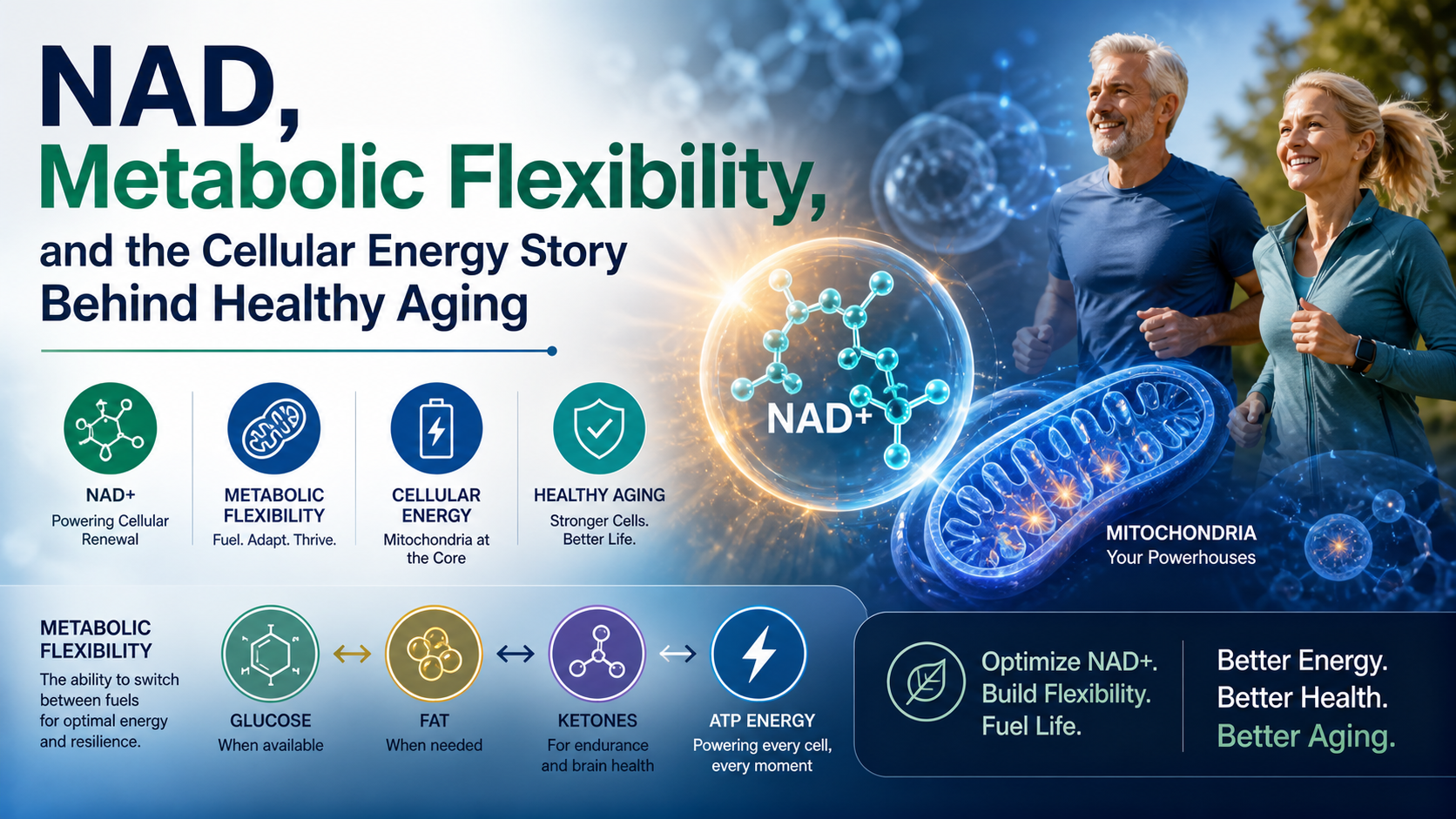
In recent years, a molecule called NAD has become one of the most discussed topics in longevity and metabolic health research.
Scientists studying aging, mitochondrial function, and metabolic disease keep returning to the same discovery: NAD sits at the center of many systems that determine how our cells produce energy, repair damage, and maintain resilience over time.
Understanding NAD helps explain how metabolism works at the cellular level — and why lifestyle habits like fasting, exercise, and nutrition can have such profound effects on health.
What Is NAD?
NAD stands for nicotinamide adenine dinucleotide.
While the name sounds technical, the role of NAD is surprisingly straightforward.
NAD is a molecule that helps cells produce energy and repair damage.
Inside every cell in the body are structures called mitochondria. These mitochondria act as the power plants of the cell, converting nutrients from food into usable energy in the form of ATP.
For this energy system to function, electrons must move through a series of chemical reactions.
NAD acts as a carrier that transports those electrons.
Without NAD, the energy system slows down.
This is why NAD is essential for cellular metabolism.
Why NAD Declines With Age
Researchers have discovered that NAD levels decline significantly with aging.
Some studies suggest levels can drop by 40–60 percent between youth and older adulthood.
Several biological mechanisms contribute to this decline.
One involves DNA repair.
Every day our DNA experiences small amounts of damage from normal metabolism, environmental toxins, inflammation, and UV radiation.
Cells use repair enzymes called PARPs to fix this damage.
However, PARP enzymes require NAD to function. Each repair event consumes NAD molecules.
Over time, this demand increases.
Another factor involves an enzyme called CD38.
CD38 breaks down NAD and becomes more active with aging, particularly in the presence of chronic inflammation.
This discovery connected two major concepts in aging research: inflammation and declining cellular energy.
Research: The NAD and NMN Mouse Study
One of the most influential experiments examining NAD involved aging mice.
Researchers observed that as mice aged, their mitochondrial function declined. Energy production slowed and endurance dropped.
Scientists then gave the mice NMN, a compound that the body converts into NAD.
After several weeks, mitochondrial function improved.
The older mice showed better endurance and improved metabolic activity.
While this did not reverse aging, the study demonstrated that restoring NAD availability improved cellular energy metabolism.
Understanding Metabolic Flexibility
One of the key metabolic concepts related to mitochondrial health is metabolic flexibility.
Metabolic flexibility refers to the body’s ability to switch between burning glucose and burning fat for energy.
After eating a meal, the body primarily burns glucose.
Between meals, the body should shift toward burning stored fat.
A healthy metabolism transitions smoothly between these fuel sources.
However, modern lifestyles often disrupt this system.
Frequent snacking, high sugar intake, and sedentary behavior can reduce the body’s ability to burn fat efficiently.
This condition is known as metabolic inflexibility and is associated with insulin resistance and metabolic disease.
NAD and Brain Health
The brain is one of the most energy-demanding organs in the body.
Although it accounts for only about two percent of body weight, it consumes approximately twenty percent of the body’s energy.
This means brain cells rely heavily on mitochondrial energy production.
Declining mitochondrial function may influence processes involved in cognitive aging and neurodegenerative disease.
Animal studies suggest that restoring NAD availability may improve mitochondrial function in neurons and support cellular repair systems.
Brain Health After Menopause
For women, mitochondrial health becomes particularly important after menopause.
Estrogen plays a significant role in supporting mitochondrial function and brain metabolism.
When estrogen levels decline during menopause, mitochondrial efficiency can decline as well.
Many women notice symptoms such as:
- brain fog
- slower memory recall
- reduced mental stamina
Supporting mitochondrial health through nutrition, exercise, sleep, and metabolic flexibility may help support cognitive resilience during this stage of life.
NAD and Metabolic Health
NAD is also connected to metabolic diseases such as insulin resistance and fatty liver disease.
When mitochondria struggle to process nutrients efficiently, metabolic signaling can shift.
Cells become less responsive to insulin, fat storage increases, and energy regulation becomes less stable.
Researchers have observed that NAD availability plays a role in mitochondrial function and metabolic regulation.
This relationship helps explain why lifestyle interventions such as exercise, fasting, and nutrient-dense diets can influence metabolic health.
Lifestyle Habits That Support NAD
While supplements like NMN have gained attention, lifestyle factors remain foundational for mitochondrial health.
Several habits influence NAD pathways:
Exercise increases mitochondrial activity and stimulates NAD recycling.
Fasting activates repair pathways and supports metabolic flexibility.
Sleep regulates circadian rhythms that influence enzymes involved in NAD metabolism.
Nutrient-dense foods provide the vitamins and minerals required for metabolic pathways.
The Bigger Picture
NAD sits at the intersection of several important biological systems:
- cellular energy production
- DNA repair
- inflammation regulation
- metabolic flexibility
- longevity pathways
By supporting mitochondrial health through nutrition, movement, sleep, and metabolic balance, we support the cellular systems that allow the body to repair and adapt over time.
Conclusion
The emerging research around NAD provides an important insight into how the body maintains energy and resilience.
Rather than focusing on a single disease or organ, NAD research highlights the importance of cellular metabolism in overall health.
When we support mitochondrial function and metabolic flexibility, we support the foundation of long-term health and vitality.