HEART HEALTH · FUNCTIONAL NUTRITION · PREVENTION
By Kim Larson · Certified Functional Nutrition Coach & Founder, Larson Nutrition · April 2025 · 10 min read
| IN THIS ARTICLE
• Why heart disease is still America’s #1 killer • What coronary artery disease actually is — in plain English • Warning signs — including the ones women most often miss • The real root causes from a Functional Nutrition perspective • The sugar and inflammation connection • The DASH and Mediterranean dietary approaches • Key nutrients for heart health • Your 5-step action plan starting today |
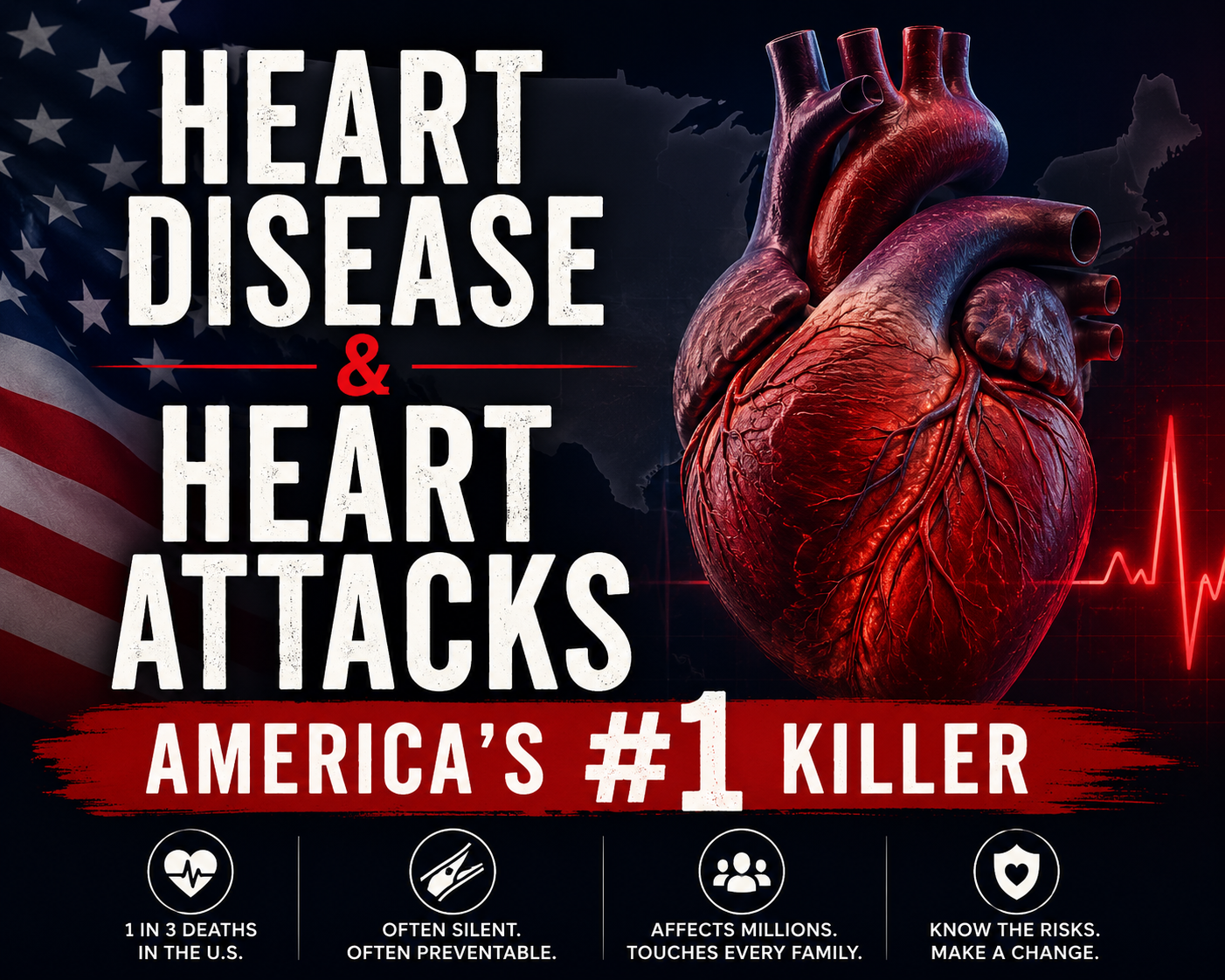
Every 34 seconds, someone in the United States dies from a cardiovascular event. That’s nearly 2,500 Americans — every single day — lost to a disease that, in most cases, is largely preventable.
Not cancer. Not car accidents. Not COVID. Heart disease. Still — in 2025 — the single biggest killer of American men and women, year after year, across nearly every racial and ethnic group.
And here is the part that keeps me up at night: up to 80% of those deaths are considered preventable — not with a miracle drug or surgery, but with what you eat, how you move, how you sleep, and how you manage stress.
That is exactly what Functional Nutrition is built to address. And that is what this article is about. Let’s dig in.
| 683K
Americans died from heart disease in 2024 — still the #1 cause of death |
Every 34 sec
someone in the U.S. dies from a cardiovascular event |
80%
of heart disease deaths are considered largely preventable |
Before we talk solutions, let’s make sure the full picture is clear — because most people genuinely underestimate how serious this is.
And here is what concerns me most: it is getting younger. Heart failure rates are rising in adults aged 35 to 64. This is no longer just a disease of old age — and unmanaged risk factors are driving it earlier and earlier in life.
The term “heart disease” is a broad umbrella, but the condition behind most heart attacks is coronary artery disease (CAD). Here’s what that actually means in plain English.
Your heart is a fist-sized muscle that beats about 100,000 times per day. It needs a constant supply of oxygen-rich blood, delivered through vessels called coronary arteries. When those arteries get narrowed or blocked — clogged with a substance called plaque — blood flow slows or stops. When it stops completely, the heart muscle downstream begins to die. That is a heart attack.
Plaque is a buildup of cholesterol, inflammatory cells, calcium, and other substances on the inner wall of your arteries. It accumulates over years and even decades — driven by inflammation, high blood sugar, oxidative stress, and insulin resistance. These are all things that are directly shaped by what we eat and how we live.
A heart attack can trigger cardiac arrest, but they are not the same thing. Both are emergencies. Both require calling 911 immediately.
| Think of coronary artery disease like rust building up inside a water pipe. Over time, the pipe narrows, flow slows, and eventually something blocks it completely. When that happens in your heart — that is a heart attack. |
One of the most dangerous things about heart disease is that it is often called the “silent killer.” Many people have no symptoms at all until something catastrophic happens. But there are warning signs — and knowing them can save your life.
This is critically important. Women often experience heart attacks very differently from men — and because of that, their symptoms get dismissed, sometimes even by doctors.
Women are also more likely to have heart attacks while resting or even asleep, and are more likely to have blockages in smaller arteries — making diagnosis harder.
⚠ HEART ATTACK WARNING SIGNS — ACT FAST
|
| Concerned about your heart health? I work one-on-one with clients to build personalized, root-cause nutrition and lifestyle plans. Visit LarsonNutrition.com → |
Conventional medicine is excellent at crisis intervention — it saves lives. But it has traditionally focused on managing risk factors rather than asking the deeper question: why do you have high cholesterol? Why is your blood pressure elevated? Why is your blood sugar out of control?
Functional Nutrition asks those “why” questions first. And when you follow the trail, you almost always end up in the same place:
| The root driver of most heart disease is chronic, low-grade inflammation — and that inflammation is largely driven by what we eat, how we move, how we sleep, and how we handle stress. |
Inflammation is your immune system’s fire alarm. Short-term, it’s lifesaving. But chronic, low-grade inflammation — the kind that smolders for years — damages the inner lining of your arteries, triggering plaque formation. What lights that fire? Processed foods, refined sugars, trans fats, a sedentary lifestyle, chronic stress, poor sleep, and environmental toxins.
This is the one that doesn’t get enough attention. When you eat sugar or refined carbs constantly, your cells start tuning out insulin’s signal. Blood sugar stays elevated — and high blood sugar directly damages blood vessel walls, speeds up atherosclerosis, raises blood pressure, and promotes inflammation. A landmark study in JAMA Internal Medicine found that consuming large amounts of added sugar significantly increased the risk of dying from heart disease — even in people who weren’t overweight.
We spent decades blaming dietary fat for heart disease. But the research increasingly points the finger at added sugars and ultra-processed foods.
When free radicals outpace antioxidants in your body, you get oxidative stress — which directly damages heart tissue and blood vessels, accelerates plaque formation, and impairs heart function. The antidote? A diet rich in colorful fruits, vegetables, and whole foods.
Chronic psychological stress isn’t just a mental health issue — it is a cardiovascular one. Stress hormones cause blood vessels to constrict, blood pressure to rise, and pro-inflammatory molecules to flood your system. For women especially, emotional stress is a significant and underrecognized heart disease risk factor.
Both too little sleep (under 6 hours) and too much sleep (over 8 hours) raise cardiovascular risk. People with insomnia have been found to have up to a 69% higher risk of heart attack compared to those without it. Even the shift to daylight savings time — just one hour of disruption — is associated with a measurable uptick in heart attacks in the days that follow.
Here is the empowering truth: the vast majority of heart disease is preventable. And even if you already have risk factors or a family history, you have far more control than you may have been led to believe.
The single most powerful thing most people can do for their heart is change what they eat. Specifically:
The REDUCE-IT clinical trial found that high-dose omega-3 supplementation reduced major cardiovascular events — including heart attack and stroke — by 25% over five years in high-risk patients. Earlier research found a 28% reduction in heart attack risk overall, and 40% in people with low fish intake. If you don’t eat fatty fish regularly, supplementation is worth discussing with your healthcare provider.
Low magnesium levels are associated with high blood pressure, arterial calcification, hardening of the arteries, and increased cholesterol. Modern diets are chronically low in magnesium because processed foods strip it out. Find it in almonds, dark leafy greens, avocados, pumpkin seeds, and dark chocolate.
Physical inactivity is a major independent risk factor for heart disease. Research shows 75% of Americans don’t meet even the minimum exercise recommendation. But you don’t need to run marathons — 30 minutes of brisk walking on most days of the week significantly reduces heart attack and stroke risk.
Stress management is cardiovascular medicine. Research-backed tools include regular physical activity, mindfulness meditation, deep breathing, maintaining social connections, and protecting genuine downtime. These aren’t luxuries — for many people, they’re medicine.
Aim for 7 to 9 hours. Address sleep apnea if you snore. Create a dark, cool, consistent sleep environment. Limit screens before bed. Your heart literally needs this recovery time.
You can’t manage what you don’t measure. Ask your doctor for:
| Looking for targeted heart health support? Visit LarsonBotanicals.com — Kim’s personally curated wellness product line to complement a heart-healthy lifestyle. |
Information without action is just noise. Here are five concrete steps you can take right now:
✓ Cut one source of added sugar today. A soda, a sweetened coffee, a packaged snack. Just one. Start there — and repeat it tomorrow.
✓ Add one anti-inflammatory food to every meal. A handful of walnuts. A cup of blueberries. Salmon for dinner. A big handful of leafy greens. One change at a time.
✓ Walk for 30 minutes today. Not tomorrow — today. It doesn’t need to be a gym. It just needs to happen consistently.
✓ Call your doctor and ask for a complete metabolic workup — fasting insulin, CRP, and a full lipid panel. Not just total cholesterol. Know your actual numbers.
✓ Go to bed 30 minutes earlier tonight. Do it again tomorrow. Your heart recovers while you sleep — give it the time it needs.
| Heart disease didn’t develop overnight — and it won’t reverse overnight. But the trajectory changes with every meal, every walk, every night of good sleep. That is the power of Functional Nutrition. It gives you back control. |
| 🎙️ Listen to the Full Episode — The Larson Health Podcast · “Heart Disease & Heart Attacks” · Available on Apple Podcasts, Spotify, iHeart Radio, Deezer & more |
| Ready to Take Your Heart Health Seriously?
At Larson Nutrition, I work one-on-one with clients to build personalized, root-cause nutrition and lifestyle plans — around your labs, your lifestyle, and your goals. Let’s build yours together. LarsonNutrition.com · LarsonBotanicals.com |
| Kim Larson
Certified Functional Nutrition Coach · Fast Like a Girl Coach · Founder, Larson Nutrition Kim Larson is a certified Functional Nutrition Coach and the founder of Larson Nutrition, where she helps clients address the root causes of chronic health conditions through personalized nutrition, lifestyle medicine, and functional medicine principles. She is the host of The Larson Health Podcast and the founder of LarsonBotanicals.com. Learn more at LarsonNutrition.com. |
Tags: Heart Disease, Heart Attack, Functional Nutrition, Cardiovascular Health, Inflammation, Mediterranean Diet, DASH Diet, Omega-3, Magnesium, Insulin Resistance, Kim Larson, Larson Nutrition
Medical Disclaimer: This article is for educational and informational purposes only and does not constitute medical advice, diagnosis, or treatment. Always consult a qualified healthcare professional before making changes to your diet, exercise routine, or medication regimen.