HEART HEALTH · STROKE PREVENTION · FUNCTIONAL NUTRITION
By Kim Larson · Certified Functional Nutrition Coach & Founder, Larson Nutrition · April 2025 · 10 min read
| IN THIS ARTICLE
• Why high blood pressure is called the “silent killer” • What your blood pressure numbers actually mean • How hypertension directly causes stroke • The F.A.S.T. stroke warning signs everyone should know • Root causes from a Functional Nutrition perspective • The DASH and Mediterranean dietary approaches • Key nutrients that support healthy blood pressure • Your 5-step action plan starting today |
Someone close to me recently lost a family friend to a stroke caused by uncontrolled high blood pressure. He was not elderly. He had no dramatic warning signs. He left behind a wife and three young children. And the hardest part — this was very likely preventable.
That loss is the reason I am writing this article. Because high blood pressure — hypertension — is the single most modifiable risk factor for stroke, and yet nearly half of all American adults have it. Most don’t know it. And of those who do, only about 1 in 5 have it under control.
This is not a scare piece. This is an empowerment piece. With the right nutrition, the right lifestyle changes, and the right knowledge, high blood pressure is a condition most people can meaningfully address — often without relying on medication alone.
Let’s start with the numbers — then talk about what you can actually do.
| 47.7%
of American adults have high blood pressure — ~120 million people |
664,470
deaths in 2023 linked to high blood pressure as a cause |
1 in 5
people with hypertension actually have it under control |
What Is High Blood Pressure? (Plain English)
Your heart pumps blood through a vast network of arteries. Blood pressure is simply the force that blood exerts against the walls of those arteries as it moves through your body. It is measured as two numbers — for example, 120 over 80.
The top number is called systolic pressure — the force when your heart beats. The bottom number is diastolic pressure — the pressure when your heart rests between beats. Normal blood pressure is below 120/80.
Blood Pressure Categories — Know Where You Stand
| Category | Systolic (top) | Diastolic (bottom) | What It Means |
| Normal | Below 120 | Below 80 | Healthy — keep it up |
| Elevated | 120–129 | Below 80 | Watch closely — lifestyle changes now |
| Stage 1 Hypertension | 130–139 | 80–89 | Action needed — see your doctor |
| Stage 2 Hypertension | 140+ | 90+ | Medical care needed urgently |
| Hypertensive Crisis | 180+ | 120+ | EMERGENCY — Call 911 immediately |
Why High Blood Pressure Is So Dangerous
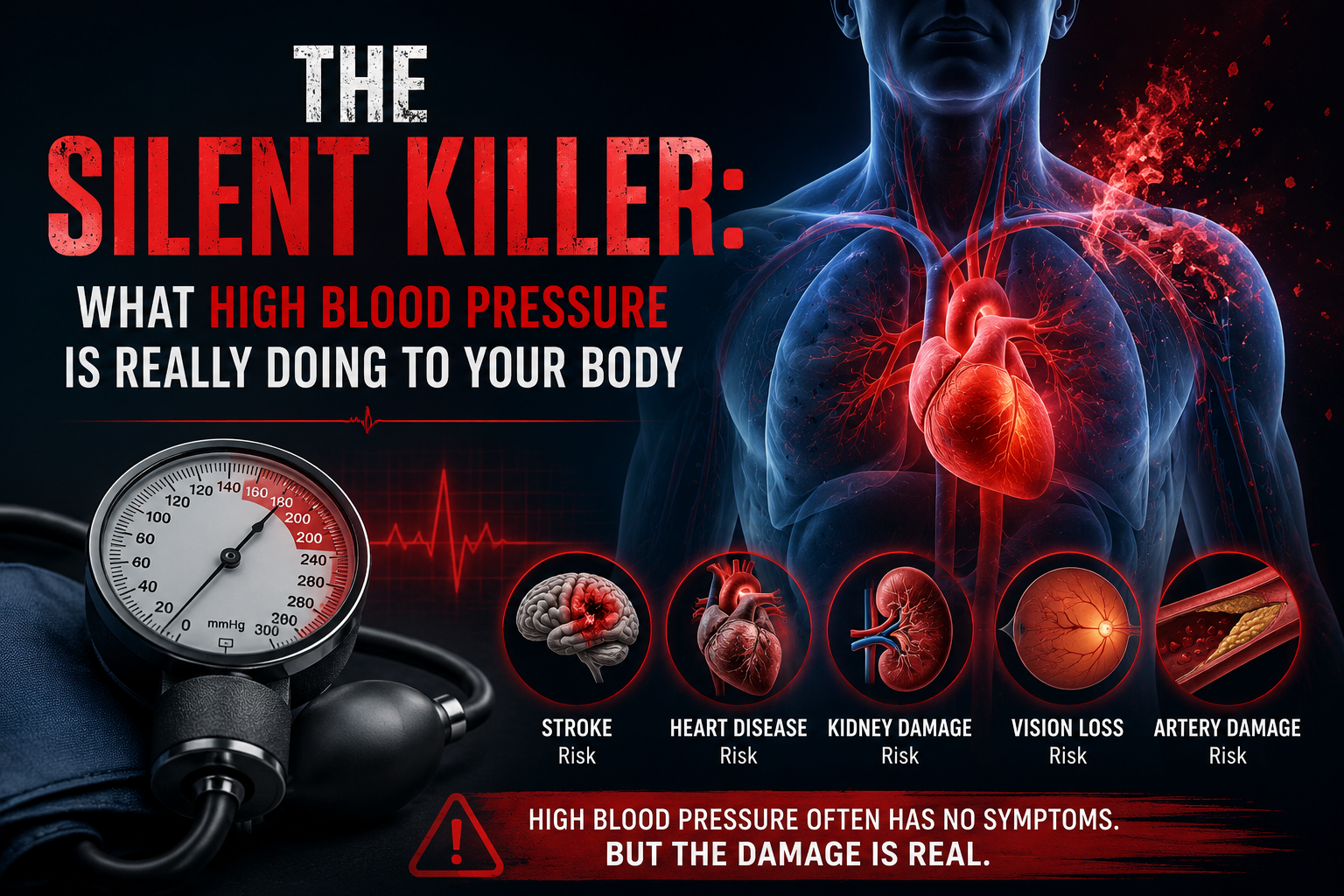
Healthy arteries are flexible and smooth on the inside. But when blood pushes through them with too much force, year after year, it starts to damage the inner lining of those vessels. Think of it like chronically overinflating a tire — eventually the rubber weakens, cracks, and becomes vulnerable to blowing out.
That damage leads to scarring. The body tries to repair tiny arterial tears, but scar tissue traps cholesterol, fat, and other substances — creating plaque. Arteries get narrower, stiffer, and harder. Blood flow slows. Clots form more easily. And you are now on a path toward heart attack, stroke, kidney failure, or dementia — unless something changes.
| High blood pressure has no symptoms. There is no pain, no warning, no signal that anything is wrong — until the day an artery tears, a clot forms, or a vessel in your brain gives way. This is why it earns the name “the silent killer.” |
How High Blood Pressure Leads to Stroke
Your brain makes up only about 2% of your body weight — but it uses roughly 20% of your entire blood supply. The moment that supply is cut off, brain cells begin to die. That is a stroke.
High blood pressure is the #1 modifiable risk factor for stroke — meaning it is the single most important thing you can change to reduce your risk.
Two Types of Stroke — Both Driven by Hypertension
Ischemic stroke accounts for about 87% of all strokes. A clot or fragment of plaque blocks an artery supplying the brain. High blood pressure accelerates plaque buildup and increases the risk of atrial fibrillation — an irregular heart rhythm that raises stroke risk fivefold.
Hemorrhagic stroke occurs when an artery in or near the brain actually ruptures. This type carries a mortality rate as high as 50% within the first month and is particularly associated with uncontrolled hypertension in younger and middle-aged adults.
| A stroke occurs every 40 seconds in the United States. Nearly 800,000 Americans have a stroke each year. High blood pressure is the leading cause — and the most preventable one. |
⚠ RECOGNIZE A STROKE — F.A.S.T.
|
Women may also experience sudden nausea, extreme fatigue, or shortness of breath as stroke symptoms. When in doubt, always call 911.
| Concerned about your blood pressure or cardiovascular risk? I work one-on-one with clients to build personalized, root-cause plans. Visit LarsonNutrition.com → |
What’s Really Driving High Blood Pressure?
Conventional medicine asks: what medication can lower these numbers? Functional Nutrition asks: why are the numbers elevated in the first place? These are very different questions — and they lead to far more lasting answers.
The average American consumes about 4,200 mg of sodium daily — nearly three times what many people with hypertension should aim for. But it’s not just about cutting salt — it’s about the sodium-to-potassium ratio. Potassium is nature’s counterbalance to sodium, relaxing blood vessel walls and supporting kidney function. Most Americans are severely deficient.
Low-grade systemic inflammation stiffens arteries and raises blood pressure over time. The primary drivers are ultra-processed foods, refined carbohydrates, and added sugars — which dominate the American diet.
Chronically elevated blood sugar directly damages blood vessel walls, promotes arterial stiffness, and disrupts the hormonal systems that regulate blood pressure — including the renin-angiotensin system, your body’s built-in blood pressure control mechanism.
Visceral fat drives inflammation, insulin resistance, and forces the heart to pump more blood. Research is consistent: meaningful weight loss reliably lowers blood pressure.
When stress is chronic, blood pressure stays chronically elevated. Stress is not just a mental health issue — it is a cardiovascular one.
Healthy blood pressure naturally dips during sleep. People who don’t get this dip face substantially higher cardiovascular risk. Loud, chronic snoring may be a sign of sleep apnea worth investigating. Treating it can have a dramatic effect on blood pressure.
Physical inactivity is an independent risk factor for hypertension. Even walking 30 minutes most days of the week produces real, measurable blood pressure reductions.
Smoking damages arterial walls. Even secondhand smoke exposure raises stroke risk by up to 30%. Alcohol, even at moderate amounts, can raise blood pressure.
The Functional Nutrition Playbook for Blood Pressure
Research shows that dietary changes alone can lower blood pressure by 5 to 13 points. A 2-point reduction in average diastolic blood pressure would reduce stroke risk by 15%. Tiny numbers. Enormous impact.
The DASH Diet — Proven to Work Within Two Weeks
The DASH diet — Dietary Approaches to Stop Hypertension — was specifically designed to lower blood pressure through food alone. Clinical trials showed reductions beginning within two weeks. It is built around:
The Mediterranean Diet — 30% Lower Cardiovascular Risk
The landmark PREDIMED study found that people following a Mediterranean diet enriched with extra-virgin olive oil or nuts had a 30% lower risk of major cardiovascular events — including stroke and heart attack. Combined with DASH principles, this is the gold standard Functional Nutrition approach to blood pressure management.
Key Nutrients That Support Healthy Blood Pressure
| The sodium reduction math: Cutting daily sodium from 4,200 mg (the American average) to 1,500 mg is one of the most powerful single dietary moves for blood pressure. About 70–75% of the sodium Americans consume comes from processed and packaged foods — not the salt shaker. |
Beyond Diet: The Lifestyle Pillars That Move the Needle
Regular aerobic exercise produces clinically significant blood pressure reductions. At least 150 minutes per week of moderate activity — brisk walking, cycling, swimming — strengthens the heart, improves arterial flexibility, reduces stress hormones, and supports insulin sensitivity.
Research-backed tools include mindfulness meditation, diaphragmatic breathing, regular physical activity, adequate social connection, and protecting time for genuine rest. These are not optional add-ons — they are core to any serious blood pressure management plan.
Healthy blood pressure should naturally dip during sleep. When it doesn’t — because of insomnia, poor sleep quality, or sleep apnea — cardiovascular risk rises substantially. If you snore loudly or your partner has noticed you stop breathing during sleep, speak with your doctor about getting tested.
High blood pressure has no symptoms. The only way to know is to measure it. This is the most important sentence in this entire article.
Home blood pressure monitors are widely available and inexpensive. Sit quietly for 5 minutes before measuring, keep your feet flat on the floor, rest your arm at heart level, and take readings morning and evening for at least three days. Share the results with your healthcare provider.
Beyond blood pressure, ask your doctor for a comprehensive metabolic workup that includes:
| Looking for targeted heart health support? Visit LarsonBotanicals.com — Kim’s personally curated wellness product line. |
Your 5-Step Action Plan — Start Today
Information without action is just noise. Here are five concrete steps you can take right now:
✓ Check your blood pressure this week. Get a home cuff, stop at a pharmacy, or call your doctor. You cannot manage what you don’t measure.
✓ Replace one processed food with a potassium-rich whole food. A banana. An avocado. Spinach in your smoothie. A sweet potato at dinner. One change, repeated daily, compounds powerfully.
✓ Read one food label today and look at sodium. Most of your sodium hides in packaged foods — bread, canned soup, condiments, deli meat. Find one lower-sodium swap.
✓ Take a 30-minute walk today. Not tomorrow — today. Your arteries begin responding to consistent movement within weeks.
✓ Share this article with one person you love who has high blood pressure or hasn’t had it checked recently. You may not know whose life you are saving.
| Controlling your blood pressure can cut your risk of stroke by almost half. That is the difference between a life lived fully and a tragedy no family should have to face. |
| 🎙️ Listen to the Full Episode — The Larson Health Podcast · “The Silent Killer: High Blood Pressure & Stroke” · Available on Apple Podcasts, Spotify, iHeart Radio, Deezer & more |
| Ready to Take Control of Your Blood Pressure — and Your Health?
At Larson Nutrition, I work one-on-one with clients to build personalized, root-cause nutrition and lifestyle plans. If high blood pressure is on your radar, let’s build a real plan together — around your labs, your lifestyle, and your goals. LarsonNutrition.com · LarsonBotanicals.com |
| Kim Larson
Certified Functional Nutrition Coach · Fast Like a Girl Coach · Founder, Larson Nutrition Kim Larson is a certified Functional Nutrition Coach and the founder of Larson Nutrition, where she helps clients address the root causes of chronic health conditions through personalized nutrition, lifestyle medicine, and functional medicine principles. She is the host of The Larson Health Podcast and the founder of LarsonBotanicals.com. Learn more at LarsonNutrition.com. |
Tags: High Blood Pressure, Hypertension, Stroke Prevention, Functional Nutrition, DASH Diet, Mediterranean Diet, Cardiovascular Health, Silent Killer, Potassium, Magnesium, Omega-3, Kim Larson, Larson Nutrition
Medical Disclaimer: This article is for educational and informational purposes only and does not constitute medical advice. Always consult a qualified healthcare professional before making changes to your diet, exercise routine, or medication regimen.