Search for “best diet,” and you’ll find certainty everywhere.
Low-carb. Plant-based. Paleo. Keto. Mediterranean.
Each claims the moral high ground—and the science.
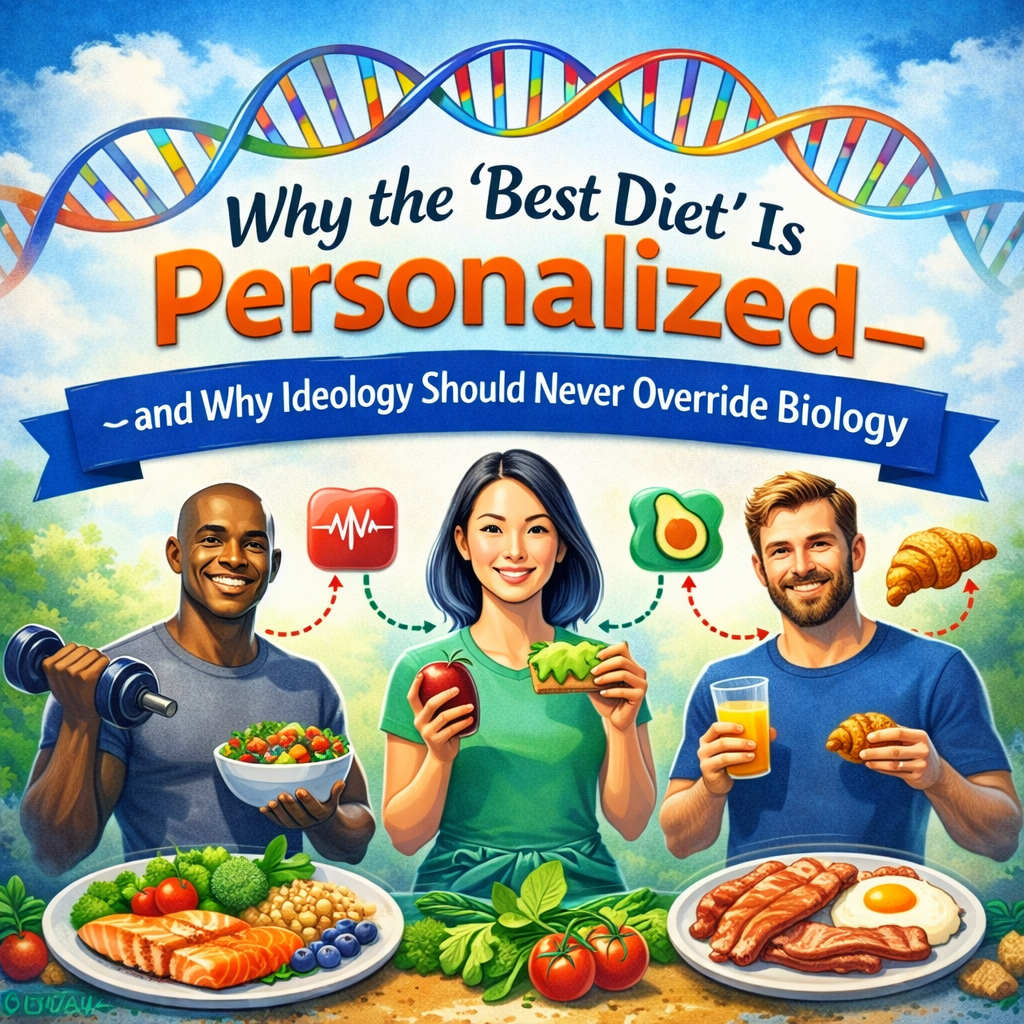
Yet the reality is far less tidy: people thrive on radically different diets, and they fail on all of them too. If one universal diet truly worked for everyone, we would already know.
The reason we don’t is simple: human biology is individual. Genetics, metabolism, hormones, stress load, gut health, activity level, and medical history all shape how someone responds to food.
When ideology overrides biology, health suffers.
When biology leads, clarity follows.
Your body is the smartest doctor in the room. The key is learning how to listen.
Universal Nutrition Principles Everyone Should Follow
While no single diet works for all people, there are foundational principles that apply across nearly every dietary pattern.
1. Prioritize Whole, Minimally Processed Foods
The human body is exquisitely adapted to foods that resemble their natural form:
meat, fish, eggs, vegetables, fruit, tubers, legumes, nuts, seeds, and herbs.
The more a food is refined, engineered, or chemically enhanced, the harder it becomes for appetite, blood sugar, and satiety hormones to self-regulate.
2. Eat Enough Protein
Protein is essential for:
- Blood sugar stability
- Muscle preservation and metabolic rate
- Neurotransmitter production
- Hormone signaling
- Immune health
Protein insufficiency is one of the most common—and overlooked—contributors to fatigue, cravings, anxiety, and metabolic slowdown across all diets.
3. Support Blood Sugar Stability
Stable blood sugar supports:
- Consistent energy
- Mental clarity
- Mood regulation
- Hormonal balance
Chronic spikes and crashes increase stress hormones, inflammation, and disease risk—even in people who are not diabetic.
4. Choose Sustainability Over Extremes
A diet that only “works” when willpower is high is not a long-term solution.
Biology always wins in the end.
Why Ultra-Processed Foods—Not Carbs, Fat, or Protein—Are the Real Problem
Macronutrients are not the enemy. Ultra-processed foods are.
Ultra-processed foods:
- Are stripped of natural fiber and structure
- Contain refined starches, industrial oils, additives, and flavor enhancers
- Override fullness signals
- Promote blood sugar spikes and overeating
Carbohydrates are not inherently harmful—refined carbohydrates without fiber are.
Fat is not the issue—industrial seed oils combined with sugar and starch are.
Protein is not excessive—protein isolates replacing real meals are.
Humans didn’t suddenly lose discipline.
The food environment changed faster than physiology can adapt.
Blood Sugar Dysregulation: A Driver of Chronic and Mental Health Conditions
Blood sugar regulation affects far more than diabetes risk.
When blood sugar swings repeatedly:
- Cortisol increases
- Inflammation rises
- Insulin signaling breaks down
- Brain chemistry becomes unstable
This contributes to:
- Anxiety and panic symptoms
- Depression and low motivation
- Brain fog and attention issues
- Sleep disruption
- Hormonal imbalance
Many people pursuing mental health solutions are unknowingly dealing with metabolic instability, driven by skipped meals, under-eating, ultra-processed foods, or diets mismatched to their physiology.
Mental health is biological—not just psychological.
Popular Diets Explained: Who They Help and What to Watch For
Keto Diet
Who it may help:
- People with insulin resistance or type 2 diabetes
- Certain neurological conditions
- Severe blood sugar dysregulation
Common mistakes:
- Undereating calories or protein
- Over-reliance on processed keto foods
- Ignoring electrolytes and fiber
Watch for:
- Fatigue, irritability, sleep problems
- Hormonal disruption
- Reduced exercise tolerance
Keto is a therapeutic tool—not a universal lifestyle.
Paleo Diet
Who it may help:
- Autoimmune or inflammatory conditions
- Gluten sensitivity
- People needing a whole-food reset
Common mistakes:
- Carbohydrate intake too low for stress or activity level
- Fear of legumes or properly prepared starches
- Excessive nut consumption
Watch for:
- Low energy
- Poor sleep
- Over-restriction
Vegan / Plant-Based Diet
Who it may help:
- Individuals who tolerate high fiber well
- Those with strong ethical motivation and careful planning
- Certain cardiovascular risk profiles
Common mistakes:
- Inadequate protein intake
- Low vitamin B12, iron, zinc, and omega-3s
- Heavy reliance on ultra-processed plant foods
Watch for:
- Fatigue and mood changes
- Hair thinning
- Poor muscle recovery
A plant-based diet can work—but it must be nutritionally intentional, not ideological.
Mediterranean Diet
Who it may help:
- A wide range of individuals
- Those seeking balance and flexibility
- Long-term cardiovascular health
Common mistakes:
- Treating it as a pasta-and-wine plan
- Insufficient protein
- Overdoing refined grains
Watch for:
- Blood sugar spikes if meals are carb-heavy
- Calorie excess from oils and grains
This pattern works largely because it emphasizes real food and balance, not because of any single ingredient.
How to Tell If Your Diet Is Actually Working
Your body provides constant feedback. A supportive diet typically results in:
Energy
- Stable energy between meals
- Minimal caffeine dependence
- No regular crashes
Digestion
- Regular bowel movements
- Minimal bloating or discomfort
- Little to no reflux
Mood and Cognition
- Emotional steadiness
- Better stress tolerance
- Improved focus and clarity
Physical Signals
- Restful sleep
- Healthy skin and hair
- Warm hands and feet
Lab Markers (When Tested)
- Stable fasting glucose and insulin
- Healthy triglycerides
- Balanced thyroid markers
- Adequate iron, B12, and vitamin D
If a diet looks perfect on paper but leaves you exhausted, anxious, cold, bloated, or obsessed with food—it is not working for you.
Final Takeaway: Biology First, Always
The body is adaptive, intelligent, and honest.
When nutrition choices honor biology, health improves.
When ideology dominates, symptoms follow.
The best diet is not the loudest, strictest, or most morally convincing.
It is the one that supports your metabolism, nervous system, and real life.
Your body is the smartest doctor in the room.
Learning to listen—and adjusting accordingly—is the real nutrition skill.