Can Eyes Regenerate Naturally?
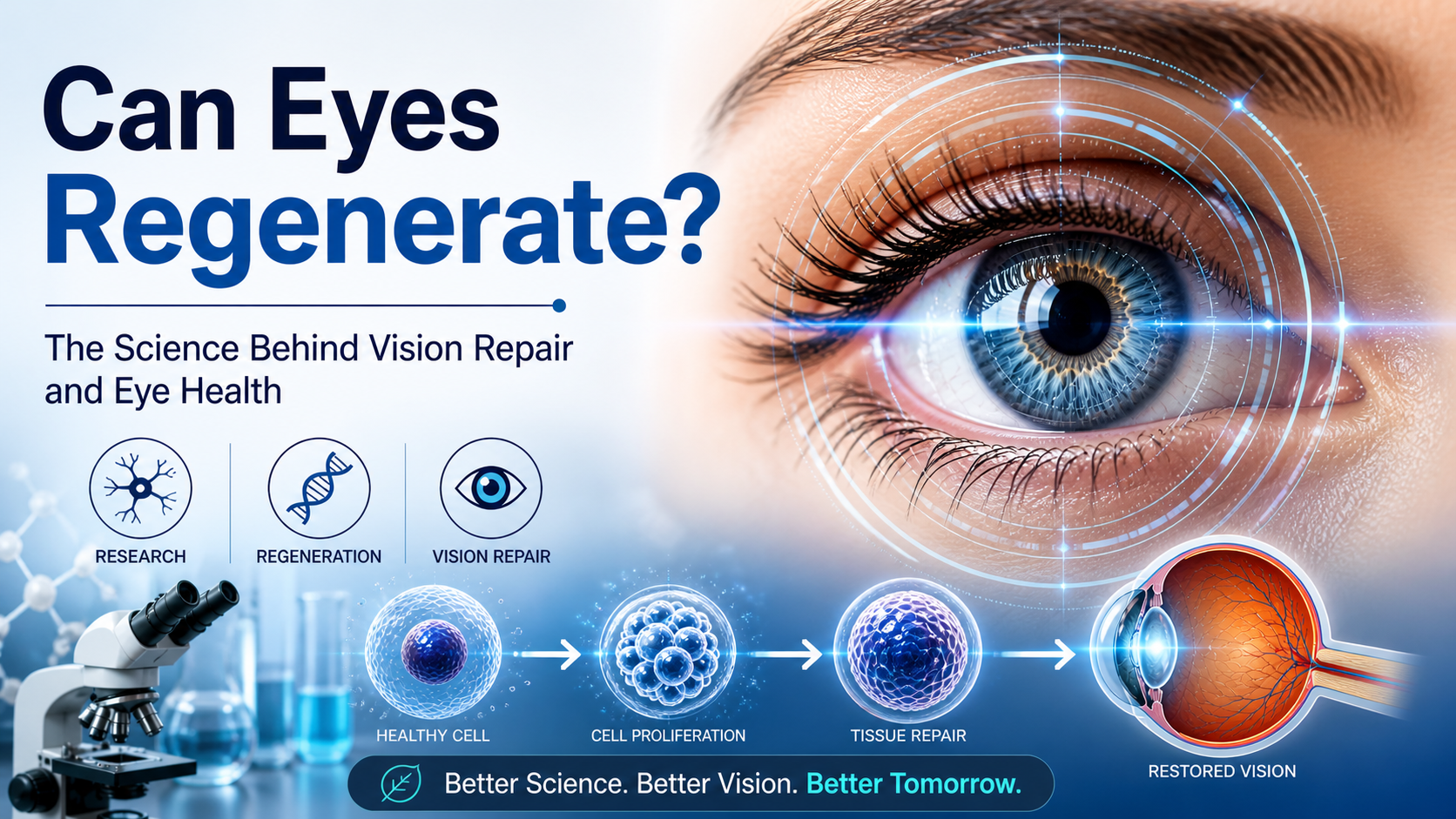
Many people believe that once eyesight declines, it cannot improve without glasses, contacts, or surgery. But new research suggests the story may be more complex. Scientists are discovering that parts of the eye may have regenerative abilities, and the brain itself can adapt to improve how we process visual information.
Understanding how the eyes regenerate and how vision can improve naturally is becoming an important topic in modern eye health research.
Rather than thinking of the eyes as simple cameras, researchers now view vision as part of a dynamic system involving the eyes, brain, nervous system, and overall health.
The Regenerative Potential of the Cornea
The cornea—the clear front surface of the eye—is one of the most regenerative tissues in the human body.
Specialized limbal stem cells, located around the edge of the cornea, continuously repair and replace corneal cells. These stem cells help maintain a healthy corneal surface and can assist in healing from injuries or damage.
In fact, limbal stem cell therapy is already being used in advanced ophthalmology to help restore vision in patients with severe corneal damage.
This regenerative ability is one reason the cornea can recover from scratches or minor injuries relatively quickly.
Can the Retina Regenerate?
The retina plays a critical role in vision by converting light into electrical signals that are sent to the brain.
Unlike the cornea, the retina has limited regenerative capacity, but emerging research shows promise. Scientists are studying retinal stem cells and regenerative therapies that may help repair retinal tissue damaged by aging or disease.
New advances in regenerative medicine and cellular therapy aim to stimulate or replace damaged retinal cells, potentially offering future treatments for vision loss.
While this research is still evolving, it highlights the growing understanding that the eye may have more healing potential than previously believed.
Neuroplasticity: How the Brain Can Improve Vision
Vision is not created solely by the eyes. It is a brain-driven process.
When light enters the eye, the retina sends signals through the optic nerve to the visual cortex in the brain, where those signals are interpreted as images.
The brain has a powerful ability called neuroplasticity, meaning it can reorganize and strengthen neural connections. This adaptability allows the brain to improve how it processes visual information over time.
Through targeted stimulation, training, or visual exercises, some people can improve visual coordination, focus, and visual processing efficiency.
Supporting Natural Vision Health
Because vision relies on the entire body, supporting overall health can play an important role in maintaining eye function.
Nutrition for Eye Health
The retina is one of the most metabolically active tissues in the body and requires specific nutrients for optimal function.
Important nutrients for eye health include:
- Lutein and zeaxanthin
- Omega-3 fatty acids
- Vitamin A
- Vitamin C
- Vitamin E
- Zinc
These nutrients help protect the eyes from oxidative stress and support healthy retinal function.
Light Exposure and Eye Health
Healthy exposure to natural light plays an important role in regulating circadian rhythms and supporting overall eye function.
Emerging research is also exploring how specific wavelengths of light may support mitochondrial energy production in retinal cells, which could influence long-term eye health.
Eye Exercises and Visual Training
Visual training and eye exercises can help improve eye coordination, focus, and visual processing. While exercises do not change the physical structure of the eye, they may strengthen the communication between the eyes and brain.
Many vision therapy programs use structured exercises to support:
- Eye tracking
- Eye teaming
- Focus flexibility
- Visual processing speed
A New Way to Think About Vision
Modern research is changing the way we understand eyesight.
Instead of viewing the eyes as fixed mechanical devices, science increasingly recognizes vision as a living system supported by the eyes, brain, nervous system, and overall health.
The future of vision care may include approaches that support the body’s natural ability to repair, adapt, and maintain healthy eyesight.
While research into eye regeneration is still developing, one thing is becoming clear: the eyes are far more dynamic and resilient than we once believed.
Key Takeaway
The question “Can eyes regenerate?” does not have a simple yes or no answer. However, research into corneal stem cells, retinal repair, neuroplasticity, and whole-body health suggests that vision may have more capacity for improvement and adaptation than previously thought.
Supporting the systems that nourish the eyes may play an important role in maintaining lifelong vision health.