For years, strength training has been overcomplicated.
You’ve probably heard it all:
You need the perfect workout split.
The exact number of sets.
The right rep range.
The best equipment.
And if you’re not doing it “optimally,” it can feel like you’re wasting your time.
But here’s what the latest research is now confirming:
The most important rule in strength training is not perfection. It’s participation.
What the Research Actually Shows
A major update from the American College of Sports Medicine analyzed one of the largest bodies of resistance training research to date.
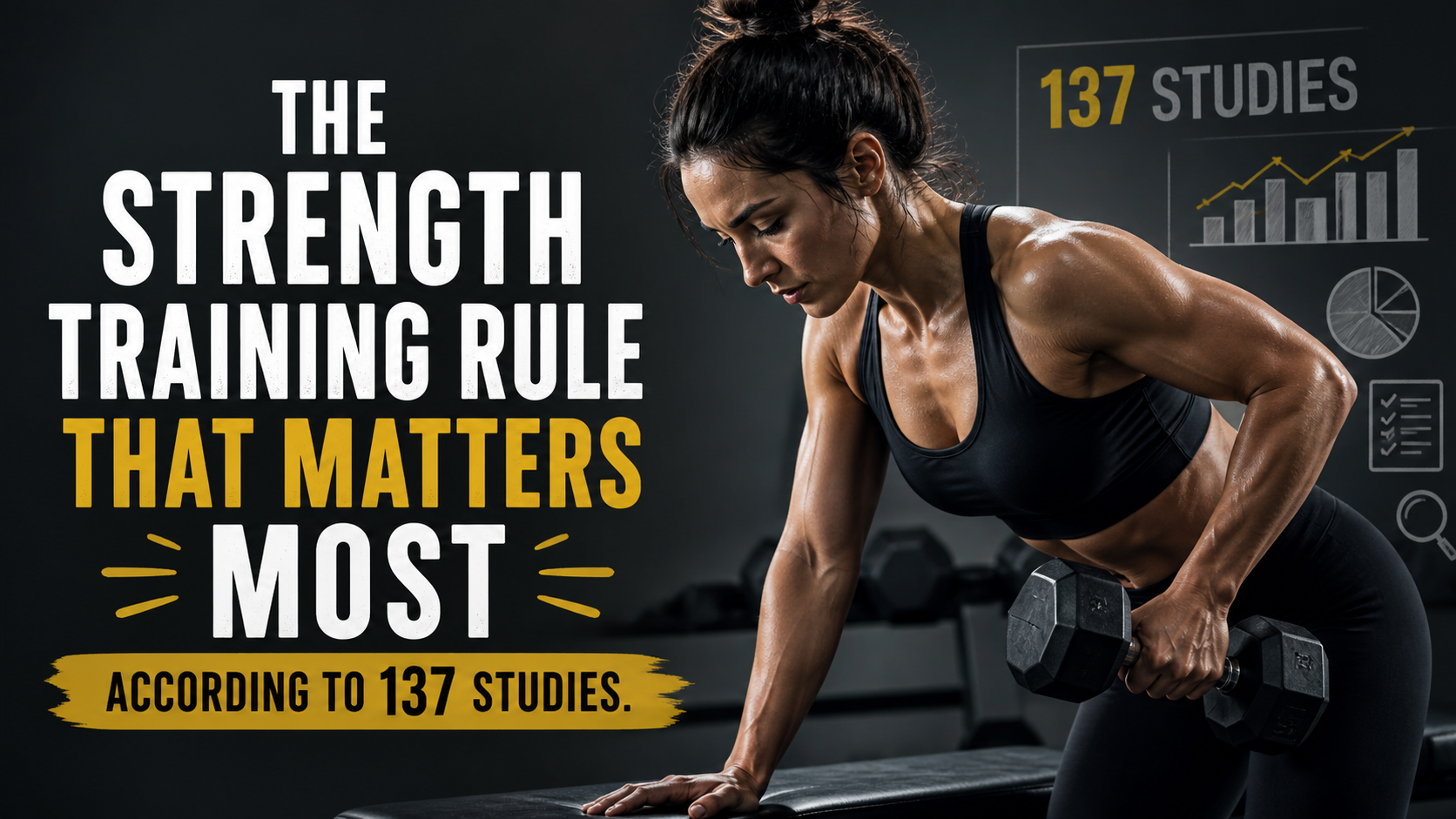
Researchers reviewed 137 systematic reviews involving more than 30,000 participants.
Instead of focusing on one training method, they looked at patterns across:
- Strength training programs lasting 6 weeks to 1 year
- Gym-based and home-based workouts
- Free weights, machines, bands, and bodyweight exercises
The goal was simple:
What actually works, consistently, across real people?
The Key Finding: Almost Any Strength Training Works
Across hundreds of studies, one pattern stood out:
Doing some resistance training is dramatically better than doing none.
Regardless of the method, participants experienced improvements in:
- Muscle strength
- Lean muscle mass
- Power and speed
- Balance and stability
- Mobility and joint function
- Daily functional movement (walking, standing, lifting)
This is especially important for women over 40, where muscle loss, bone density decline, and metabolic slowdown accelerate.
Why This Matters More After 40
As women move through perimenopause and menopause, several key changes occur:
- Estrogen declines → reduced muscle protein synthesis
- Increased fat storage, especially in the midsection
- Decreased bone density
- Slower metabolism
Strength training is not optional at this stage of life—it is essential.
But here’s where many women get stuck:
They believe they need the “perfect plan” to get results.
This research proves otherwise.
Consistency Beats Perfection
The biggest takeaway from 137 studies is this:
You do not need the perfect program. You need a consistent one.
Whether you are:
- Using dumbbells at home
- Doing bodyweight workouts
- Using resistance bands
- Going to a gym
The benefits still show up.
What matters most is:
- Showing up regularly
- Progressively challenging your muscles
- Staying consistent over time
What Actually Moves the Needle
While many variables were studied (sets, reps, load, frequency), the differences between “optimal” and “good enough” were often small.
What made the biggest difference?
Adherence.
The people who stayed consistent got results.
The people who stopped… didn’t.
A Simple Strength Training Framework That Works
If you’re feeling overwhelmed, start here:
Frequency
2–4 days per week
Exercises
Focus on full-body movements:
- Squats or sit-to-stands
- Push (push-ups, presses)
- Pull (rows, bands)
- Hinges (deadlifts, glute bridges)
- Core stability
Intensity
Moderate effort (you should feel challenged, but not exhausted)
Progression
Gradually increase:
- Weight
- Reps
- Time under tension
The Real Goal: Longevity, Not Perfection
Strength training is not just about aesthetics.
It’s about:
- Preventing sarcopenia (age-related muscle loss)
- Supporting metabolic health
- Reducing risk of insulin resistance
- Improving balance and preventing falls
- Maintaining independence as you age
This is about quality of life.
How This Fits Into a Functional Nutrition Approach
At Larson Nutrition, we don’t separate exercise from nutrition.
To truly support strength training, you also need:
- Adequate protein intake
- Electrolyte balance
- Anti-inflammatory nutrition
- Strategic fasting (when appropriate)
- Recovery and sleep
This is how you build a body that is strong, resilient, and metabolically healthy.
Final Takeaway
If you’ve been waiting for the “perfect” workout plan to start…
This is your sign to stop waiting.
The best strength training program is the one you will actually do.
Start simple. Stay consistent. Build from there.












One Response
I like it