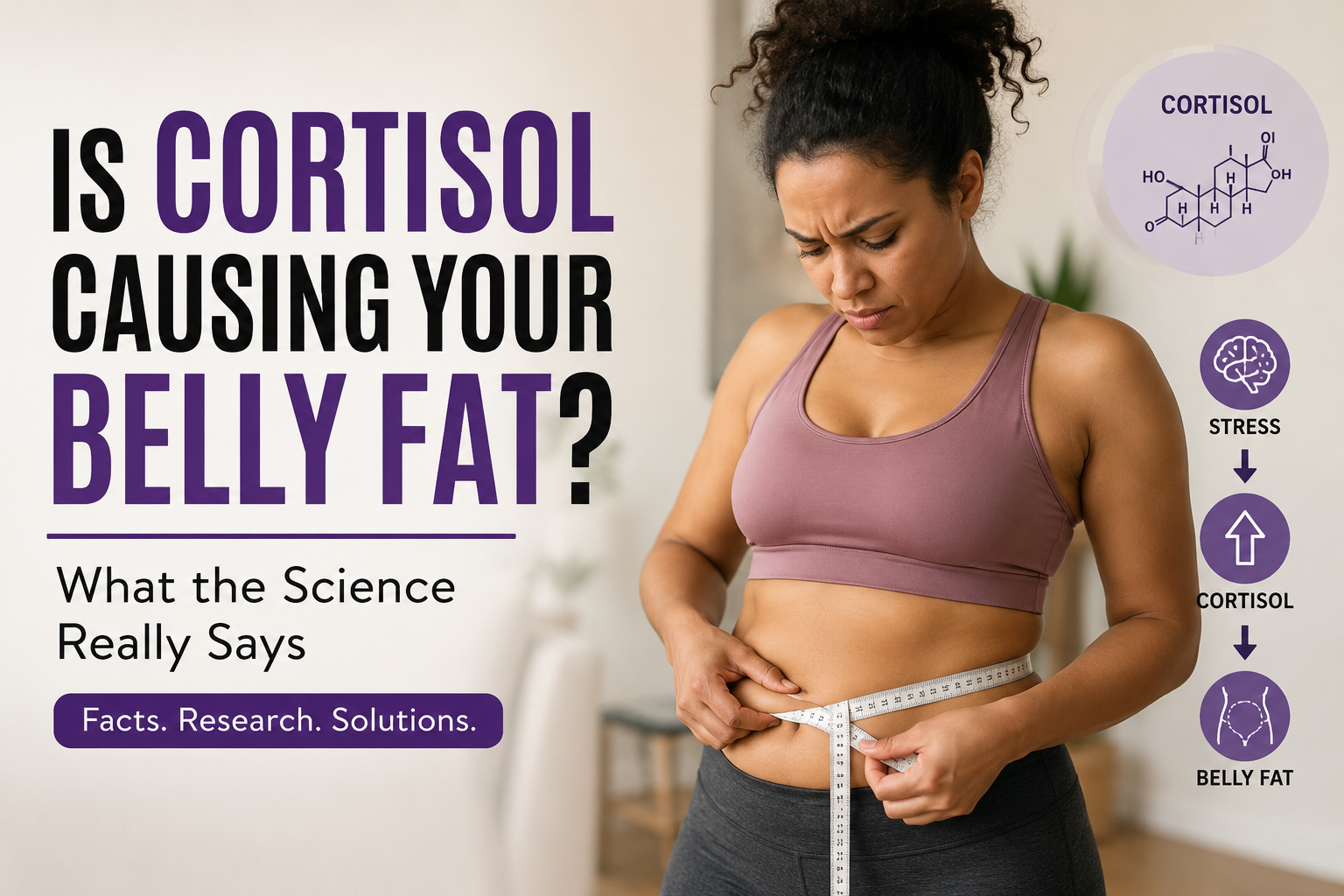
If you’ve spent any time on social media lately, you’ve probably seen countless posts claiming that cortisol is the reason you can’t lose weight.
According to many influencers, stubborn belly fat, weight gain, poor sleep, cravings, fatigue, and even aging itself can all be blamed on “high cortisol.”
The message is often simple:
“Lower your cortisol and the weight will melt away.”
Unfortunately, the science isn’t nearly that simple.
While cortisol does play an important role in metabolism and body composition, the truth is far more nuanced than many online claims suggest.
Let’s separate fact from fiction and explore what research actually tells us about cortisol, stress, menopause, belly fat, and what really works for long-term health.
Cortisol is a hormone produced by your adrenal glands.
It is often called the “stress hormone,” but cortisol does much more than respond to stress.
Healthy cortisol levels help regulate:
Without cortisol, we couldn’t survive.
In fact, cortisol is essential for life.
The goal isn’t to eliminate cortisol. The goal is to maintain healthy cortisol patterns.
One of the biggest myths circulating online is that cortisol is harmful.
In reality, cortisol is incredibly important.
Cortisol naturally rises in the morning to help wake us up and provide energy for the day. It gradually declines throughout the evening, helping prepare the body for sleep.
This natural rhythm is called the circadian cortisol pattern.
Problems arise when cortisol remains elevated for long periods due to chronic stress, poor sleep, illness, overtraining, or other health challenges.
The issue isn’t cortisol itself.
The issue is chronic dysregulation.
The answer is both yes and no.
Research shows that chronically elevated cortisol levels can contribute to increased abdominal fat storage.
However, cortisol rarely acts alone.
Cortisol interacts with:
This is why the relationship between cortisol and weight gain is complex.
People experiencing prolonged stress often:
These factors often contribute more to weight gain than cortisol itself.
In other words, cortisol may be part of the story, but it is rarely the entire story.
For women over 50, menopause often gets blamed on cortisol when something else is happening.
As estrogen declines during menopause, body fat distribution changes.
Many women notice:
Even when body weight remains stable, fat may shift from the hips and thighs toward the abdomen.
Researchers believe declining estrogen plays a significant role in this redistribution of fat.
This explains why many women suddenly develop what feels like “menopause belly” despite maintaining similar eating habits.
While stress can contribute, hormonal changes are often a major driver.
If there is one factor that deserves more attention, it’s sleep.
Research consistently shows that poor sleep affects:
Even a few nights of inadequate sleep can increase hunger and make high-calorie foods more appealing.
Sleep deprivation also makes blood sugar regulation less efficient.
When blood sugar becomes more unstable, insulin levels often rise.
Higher insulin levels can make fat loss more difficult, particularly around the abdominal area.
This is one reason why women who focus exclusively on dieting while ignoring sleep often struggle to see results.
The body is interconnected.
You cannot separate stress, sleep, hormones, and metabolism.
Stress doesn’t magically create body fat.
Instead, stress influences behaviors and biological processes that can contribute to weight gain.
When stress is high, people often:
These patterns create the perfect environment for gradual weight gain.
This doesn’t mean stress management is unimportant.
It means stress management works best when combined with healthy nutrition, movement, and sleep habits.
If your goal is to improve body composition, reduce abdominal fat, and support healthy aging, the research points toward several strategies.
Many women over 50 do not consume enough protein.
Protein helps:
Aim for protein at each meal and spread intake throughout the day.
One of the most effective ways to improve body composition is building and maintaining muscle.
Strength training helps:
Walking is excellent for cardiovascular health, but resistance training provides benefits that walking alone cannot.
Sleep may be one of the most underrated weight-management tools available.
Healthy sleep supports:
Many experts recommend aiming for seven to nine hours of quality sleep per night.
You do not need to eliminate stress.
That isn’t possible.
Instead, focus on healthy recovery habits such as:
The goal is resilience, not perfection.
Stable blood sugar often leads to better energy, fewer cravings, and improved appetite control.
Helpful habits include:
These strategies improve metabolic health regardless of what your cortisol levels are doing.
Many supplements claim to “lower cortisol.”
While some ingredients such as ashwagandha have shown promise in certain studies, no supplement can compensate for chronic sleep deprivation, poor nutrition, inactivity, or unmanaged stress.
Supplements may play a supporting role, but they should never be viewed as a magic solution.
One of the biggest mistakes women make is assuming a single hormone is responsible for every symptom they experience.
The human body is far more complex.
Body composition after 50 is influenced by:
Focusing on just one hormone often distracts from the habits that matter most.
Healthy aging isn’t just about maintaining a healthy weight. It’s about supporting your entire body.
The same habits that support metabolism—quality nutrition, adequate protein, strength training, stress management, and sleep—also support skin health.
Chronic stress and poor sleep can affect skin appearance, hydration, and overall skin resilience over time.
At Larson Nutrition, we encourage women to nourish themselves from the inside through healthy lifestyle habits and from the outside with clean, thoughtfully formulated skincare. For women seeking botanical skincare made with carefully selected ingredients, visit LarsonBotanicals.com to explore products designed to support healthy, radiant skin at every age.
Is cortisol causing your belly fat?
Not by itself.
While chronic stress and elevated cortisol can contribute to abdominal weight gain, the science shows that sleep, muscle mass, blood sugar regulation, menopause-related hormonal changes, nutrition, and physical activity all play important roles.
Instead of chasing the latest cortisol hack, focus on the fundamentals:
These evidence-based strategies consistently outperform quick fixes and provide benefits that extend far beyond the number on the scale.
The goal isn’t simply losing belly fat.
The goal is building a healthier, stronger, more resilient body for the decades ahead.












2 Responses
Thank you, Kim. It is refreshing to see this researched.
I am so tired of media, government, quack doctors lying to us about our bodies, food and “science”.
I enjoyed this article.
Thank you Barbie!! So good to hear from you! Hope you continue to read the newsletters and great insights to keep learning. Love you.