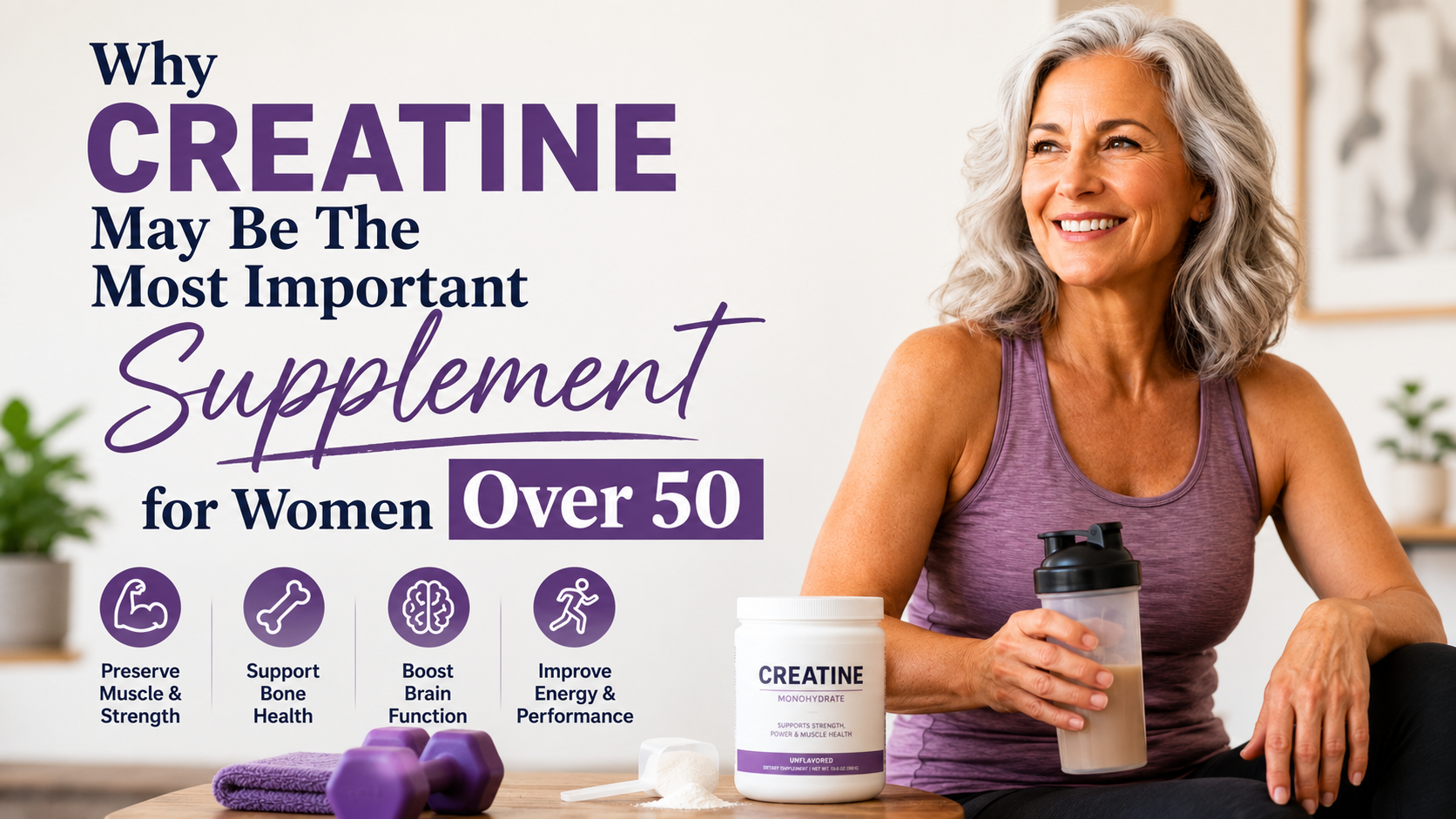
If you’ve always thought creatine was just for bodybuilders or young athletes trying to build muscle, it’s time to take another look.
Over the past decade, research has revealed that creatine may be one of the most beneficial supplements available for women over 50. In fact, scientists are now studying creatine not only for muscle health but also for brain function, bone health, energy production, healthy aging, and even cognitive resilience.
As women enter menopause and beyond, maintaining strength, preserving muscle mass, supporting bone density, and protecting cognitive health become increasingly important. Creatine is emerging as one of the few supplements that may help support all of these areas.
Let’s explore what the science actually says.
Creatine is a naturally occurring compound found in your muscles and brain. Your body produces some creatine on its own, and you also obtain small amounts through foods such as:
However, dietary intake alone often provides only one to two grams daily.
Most research showing benefits uses supplementation to increase the body’s creatine stores beyond what food alone typically provides.
Creatine works by helping produce ATP (adenosine triphosphate), which is the primary energy currency of the body’s cells.
Think of ATP as the fuel that powers every muscle contraction, movement, and countless cellular functions throughout the body.
Many women begin experiencing significant physiological changes during and after menopause, including:
Research suggests creatine may help support several of these challenges simultaneously.
Unlike many supplements marketed to women, creatine has decades of scientific research behind it.
One of the most well-established benefits of creatine is its ability to support muscle health.
After age 50, muscle loss accelerates, particularly after menopause. This age-related decline, known as sarcopenia, can impact mobility, balance, strength, metabolism, and overall quality of life.
Studies consistently show that creatine supplementation combined with resistance training can help:
This is particularly important because muscle isn’t just about appearance.
Muscle helps regulate blood sugar, supports metabolism, protects bones, improves balance, and helps maintain independence as we age.
For women focused on healthy aging, preserving muscle may be one of the most important investments they can make.
One of the most exciting areas of creatine research involves cognitive function.
While many people associate creatine with muscles, approximately 5% of the body’s creatine is stored in the brain.
Researchers are investigating creatine’s role in:
The brain requires enormous amounts of energy to function properly.
Because creatine helps replenish cellular energy stores, scientists believe it may help support brain function during periods of stress, aging, sleep deprivation, or increased cognitive demand.
Although research is ongoing, the findings are promising, particularly for older adults.
For women concerned about osteopenia or osteoporosis, creatine may offer additional benefits.
Bone health naturally declines after menopause due to reductions in estrogen.
While creatine itself is not a bone-building supplement, research suggests it may indirectly support bone health by helping women:
Stronger muscles place beneficial stress on bones, which helps stimulate bone maintenance.
When combined with strength training, creatine may help support a healthier musculoskeletal system overall.
Many women describe feeling more energetic during workouts after beginning creatine supplementation.
This shouldn’t be surprising.
Creatine’s primary role is helping regenerate ATP, the body’s energy molecule.
Higher creatine stores may help support:
It’s important to note that creatine is not a stimulant.
Unlike caffeine, it doesn’t create a temporary energy surge.
Instead, it helps support the body’s natural cellular energy systems.
This is one of the most common concerns women have.
The answer is yes—but probably not in the way you think.
Creatine helps muscles store additional water inside muscle cells.
This intracellular hydration is actually considered beneficial and is one reason muscles often appear fuller and healthier.
Some women may notice a small increase on the scale during the first few weeks of supplementation.
This is not body fat.
It’s increased water stored within muscle tissue.
For many women, the long-term benefits of improved muscle health far outweigh this temporary change.
Creatine is one of the most extensively studied supplements in the world.
Research spanning decades has consistently demonstrated its safety in healthy individuals when used appropriately.
Numerous scientific reviews have found no evidence that recommended doses of creatine damage healthy kidneys.
However, individuals with existing kidney disease should consult their healthcare provider before beginning supplementation.
As with any supplement, quality matters.
Choose products from reputable manufacturers that undergo third-party testing.
Most experts recommend:
3–5 grams daily
This is the amount used in many long-term studies and is sufficient for most women.
Some people choose to take:
20 grams daily divided into four doses for five to seven days
followed by a maintenance dose.
However, a loading phase is not necessary.
Taking 3–5 grams daily consistently will gradually increase creatine stores over several weeks.
The good news is timing appears to matter far less than consistency.
Many women simply add creatine to:
The most important factor is taking it regularly.
While creatine offers benefits on its own, research consistently shows the greatest improvements occur when supplementation is combined with resistance training.
Simple exercises such as:
can help maximize the benefits.
Even two or three strength-training sessions per week can make a significant difference.
While creatine is exciting, it should never be viewed as a magic solution.
The foundation of healthy aging still includes:
Supplements work best when they support an already healthy lifestyle.
Healthy aging is about more than maintaining muscle and cognitive function. It also includes caring for your skin, which undergoes significant changes during and after menopause.
As collagen production naturally declines, many women notice increased dryness, loss of elasticity, and changes in skin texture.
Just as proper nutrition helps support the body from within, quality skincare can help support healthy skin from the outside.
At Larson Nutrition, we believe wellness starts with daily habits such as strength training, adequate protein, restorative sleep, and evidence-based supplementation. For women seeking clean botanical skincare to complement a healthy lifestyle, visit LarsonBotanicals.com to explore handcrafted products formulated with carefully selected ingredients designed to support healthy, radiant skin at every stage of life.
Creatine is no longer just a supplement for athletes.
Research suggests it may be one of the most valuable supplements available for women over 50.
Its potential benefits include:
Combined with adequate protein intake and regular strength training, creatine may help women remain stronger, more active, and more resilient for decades to come.
When it comes to healthy aging, few supplements have as much scientific support as creatine.
And that may be why creatine is increasingly being recognized as one of the most important supplements for women over 50.